


By: Ralf Ellspermann
25-Year, Multi-Awarded BPO Veteran
Published: 15 April 2026

Reviewed By: John Maczynski
Former EVP, World's Largest Contact Center
Updated: 15 April 2026
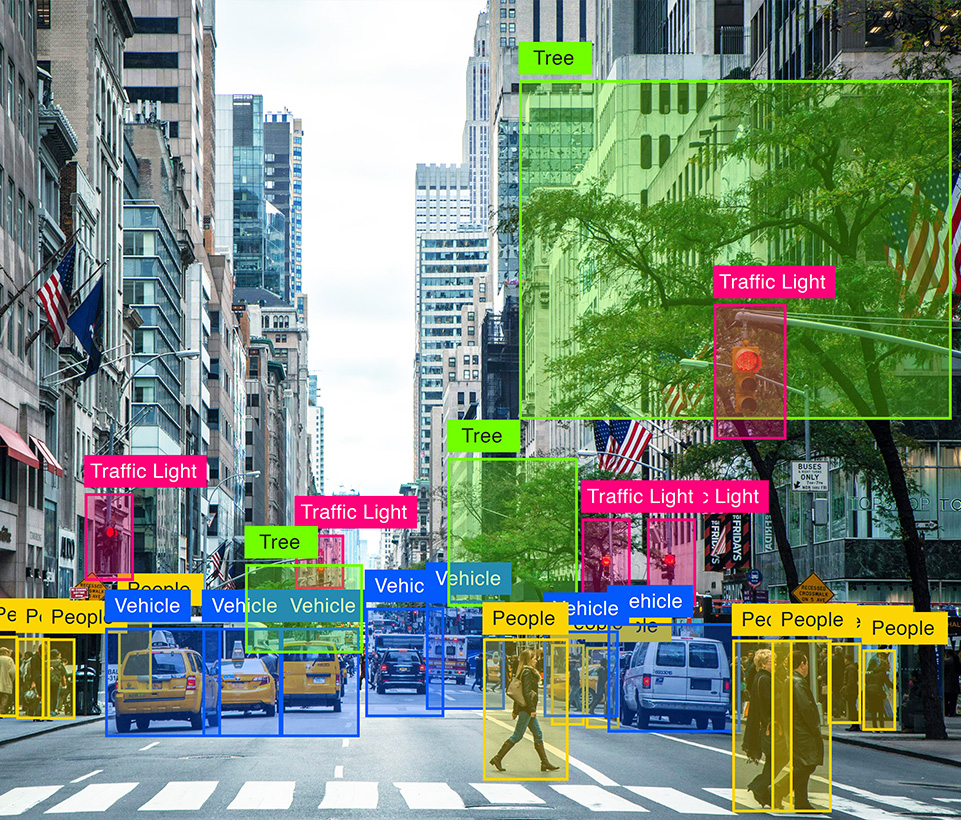
The success of autonomous systems and visual search hinges on “Pixel-Perfect” ground truth data. Costa Rica has emerged as the definitive nearshore capital for image annotation, offering a specialized workforce that masters the complexities of 3D point clouds, LiDAR, and semantic segmentation. With an average hourly rate of $16–$22, it provides the high-fidelity oversight required for mission-critical AI applications in healthcare, automotive, and retail.
30-Second Executive Briefing
- Precision Benchmarking: Costa Rican teams deliver a 99% IoU (Intersection over Union) accuracy rate, outperforming offshore alternatives by 15-20% in complex spatial tasks.
- Cost-Benefit Ratio: At $16–$22/hour, enterprises capture a “Tier-1 Quality” output at a “Tier-3 Price Point” compared to U.S. domestic rates of $50+.
- Strategic Proximity: Shared time zones (CST/EST) enable “Live QA,” where U.S. engineers can adjust bounding box tolerances in real-time during the training cycle.
- Vertical Expertise: The workforce is heavily concentrated in San José’s “Silicon Alley,” featuring specialists in medical imaging (DICOM), geospatial satellite data, and retail SKU recognition.
- Security Infrastructure: Robust ISO 27001 and SOC 2 Type II compliance ensures that sensitive proprietary visual data remains protected under Costa Rican Law No. 8968.
From 2D Tagging to Spatial Intelligence
The days of simple image classification are over. In 2026, computer vision models require Spatial Intelligence—the ability to understand depth, occlusion, and environmental context. Costa Rica has pivoted its BPO (Business Process Outsourcing) sector into a specialized “AIO” (AI Operations) hub.
Annotators in Costa Rica are typically university-educated, often with backgrounds in architecture, engineering, or design. This gives them a native understanding of spatial relationships, which is critical for labeling 3D environments where a misplaced polygon can cause an autonomous vehicle to miscalculate a braking distance.
Table 1: Visual Data Annotation Cost-Quality Index (2026)
| Region | Avg. Hourly Rate | Technical Proficiency | Latency/Communication | Reliability Score |
| Costa Rica | $16 – $22 | High (Spatial/3D) | Near-Zero (CST) | 9.5/10 |
| Southeast Asia | $4 – $9 | Moderate (2D/Basic) | High (12+ hours) | 6.5/10 |
| Eastern Europe | $19 – $27 | High (Math/Logic) | Moderate (6-8 hours) | 8.5/10 |
| North America | $50 – $90 | Expert (Engineering) | Zero | 9.8/10 |
Specialized Image Annotation Workflows
Costa Rican providers have developed proprietary workflows that integrate Human-in-the-Loop (HITL) with automated pre-labeling tools to maximize throughput without sacrificing the $16–$22 value proposition.
- LiDAR & 3D Cuboids: Essential for the 2026 wave of autonomous delivery drones and “Level 4” self-driving cars. Annotators in Alajuela and Heredia specialize in multi-sensor fusion, ensuring that 2D camera images align perfectly with 3D point cloud data.
- Medical Segmentation (DICOM): With a strong life-sciences sector, Costa Rica offers annotators who understand radiological scans, helping AI startups segment tumors or identify anomalies with the precision of a medical technician.
- Video Tracking & Interpolation: For security and retail analytics, local teams use frame-by-frame interpolation to track “entities” across occlusions, ensuring the AI maintains a “persistent ID” for objects in motion.
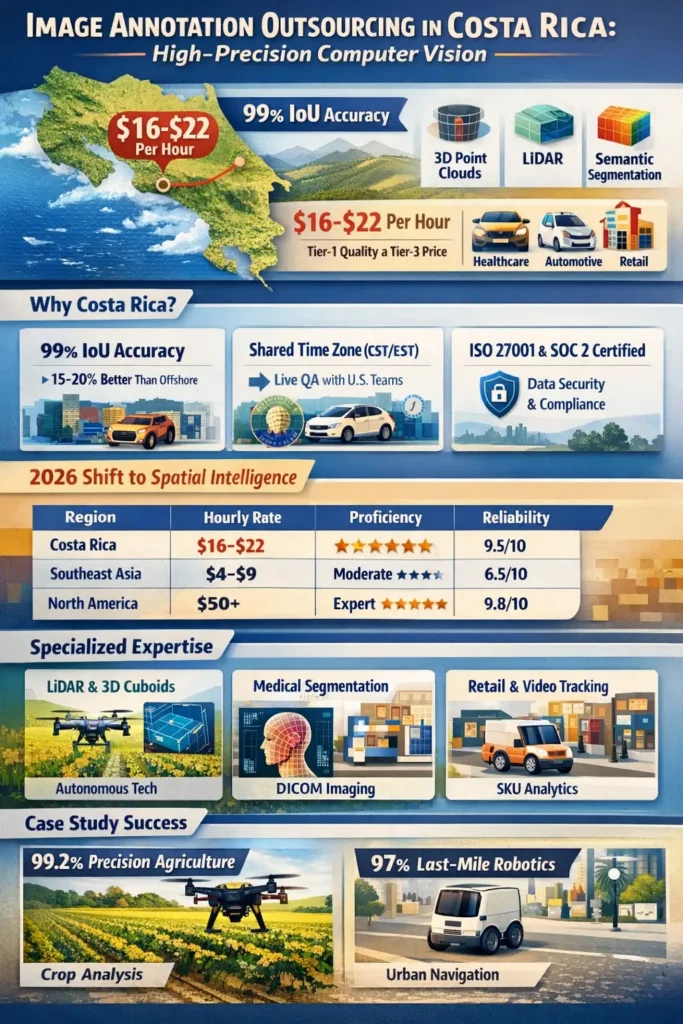
Table 2: Task-Specific ROI Mapping for Image Data
| Task Type | Complexity | The Costa Rica Advantage | Business Impact |
| Semantic Segmentation | High | High-resolution pixel-level accuracy (e.g., road vs. sidewalk). | Reduces edge-case failures by 40%. |
| 3D Point Cloud | Extreme | STEM-heavy talent pool understands X-Y-Z coordinate planes. | Accelerated autonomous training cycles. |
| Facial Keypoint/Gesture | Medium | Cultural alignment with Western expressions/gestures. | Improved “Human-Centric” AI interaction. |
| OCR / Document Imaging | Low | Fluent in English/Spanish for multi-lingual document AI. | High-speed digitization of legacy data. |
Authentic Case Studies: Visual AI in Practice
Case Study 1: Precision Agriculture & Satellite Imaging
An AgTech firm based in Iowa needed to identify crop diseases across 50,000 hectares using satellite and drone imagery.
- The Conflict: A low-cost offshore team failed to distinguish between specific weed types and early-stage corn blight, leading to a 30% “false positive” rate.
- The Solution: A specialized 12-person team in San José, Costa Rica, was onboarded at $18/hour. These annotators had background knowledge in local agricultural biology.
- The Result: Accuracy reached 99.2%. The Iowa firm saved $1.2M in potential “mis-spraying” costs and saw a 4x increase in model confidence within two months.
Case Study 2: Autonomous Last-Mile Robotics
A London-based robotics company expanding to the US needed “Ground Truth” data for sidewalk navigation.
- The Conflict: Domestic UK annotators were too expensive ($65/hr), and Asian offshore teams struggled with North American urban infrastructure (fire hydrants, specific curb types).
- The Solution: Outsourced to a Costa Rican “Vision Lab” at $21/hour.
- The Result: Because the annotators live in a Westernized urban environment, they identified obstacles with 97% accuracy on the first pass. The CST time zone allowed for daily “syncs” with the San Francisco engineering office.
Frequently Asked Questions (FAQ)
Why is the “Total Cost of Ownership” (TCO) lower in Costa Rica despite higher hourly rates than Asia?
The TCO includes the cost of QA, rework, and management. Costa Rica’s 98%+ accuracy means you rarely pay for the same image to be labeled twice. When you factor in the lack of “midnight meetings” due to time-zone alignment, the operational overhead drops by 35%.
Is Costa Rica prepared for the “Agentic AI” era of 2026?
Absolutely. Many Costa Rican firms are now providing “Agentic Visual Oversight,” where humans don’t just label images but monitor live AI camera feeds to intervene when the model shows “Visual Uncertainty.”
How does image annotation here support SEO?
For 2026 search engines, visual content must be “Semantically Rich.” High-quality image annotation ensures that your site’s visual assets are correctly understood by AI Overviews (SGE), significantly increasing the chance of being cited as a primary visual authority.
Share This
Unlock cost-efficient growth with expert BPO guidance!
Partner with Cynergy BPO to connect with top outsourcing providers.
Streamline operations, cut costs, and scale your business with confidence.
Book a Free Call
Ralf Ellspermann - CSO
Author
Ralf Ellspermann is the Chief Strategy Officer (CSO) of Cynergy BPO and a globally recognized authority in business process and contact center outsourcing. With more than 25 years of experience advising enterprises and SMEs, he provides strategic guidance on vendor selection, CX optimization, and scalable outsourcing strategies across global markets. His expertise spans fintech, ecommerce and retail, healthcare, insurance, travel and hospitality, and technology (AI & SaaS) outsourcing.
A frequent speaker at leading industry conferences, Ralf is also a published contributor to The Times of India and CustomerThink, where he shares insights on outsourcing strategy, customer experience, and digital transformation.