


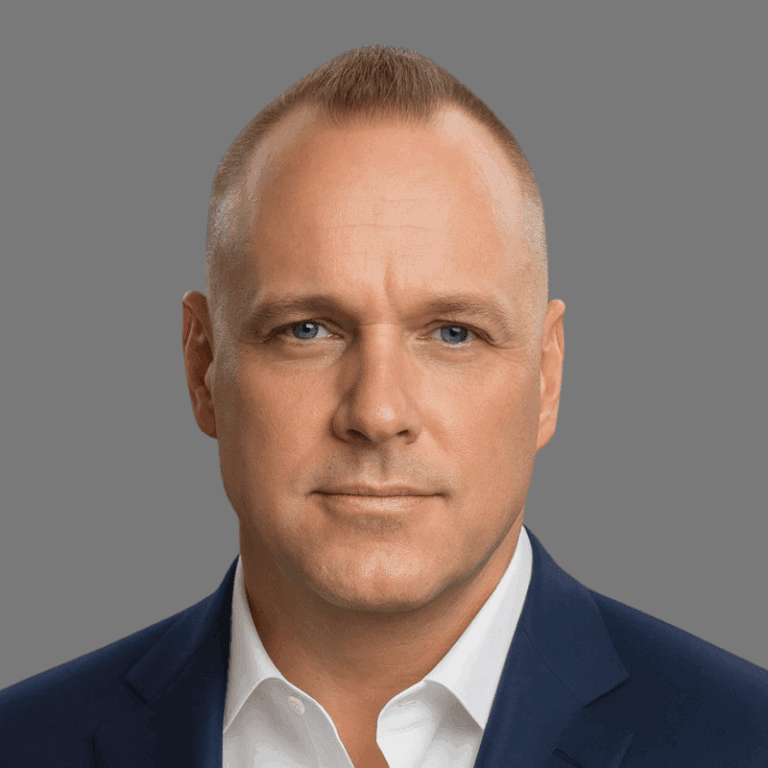
By: Ralf Ellspermann
25-Year, Multi-Awarded BPO Veteran
Published: 24 February 2026
Updated: March 6, 2026
30-Second Executive Briefing
- The Inflection Point: 2026 marks the shift from “Assistive” tools to Semi-Autonomous Healthcare Agents that execute end-to-end administrative and clinical workflows.
- The India Advantage: Accessing the IndiaAI Mission’s sovereign compute (expanding beyond 58,000 GPUs in early 2026) allows Indian BPOs to run specialized medical Small Language Models (SLMs) for real-time care coordination.
- Information Gain: We explore “PX Orchestration”—how Agentic AI reduces “administrative friction” to return 25% of clinical time back to patient care.
- Compliance: Total adherence to the DPDP Act 2026, ensuring patient data is tokenized and processed within zero-trust environments.
From Multi-Channel to Agentic PX Orchestration
The healthcare industry has reached a critical crossroads in 2026. Global health systems are no longer just battling diseases; they are battling “administrative burnout.” In response, Healthcare Outsourcing in India has evolved beyond simple medical coding and billing into the era of Agentic PX Orchestration.
In 2026, the standard for excellence is a holistic member experience rather than fragmented KPIs. While many providers historically struggled to go beyond voice and email, the modern Indian BPO hub now seamlessly migrates patients into chat and social media strategies. This mirrors how consumers interact with top-tier retail or tech brands, establishing a new baseline for engagement.
John Maczynski, CEO of Cynergy BPO, a 40-year BPO veteran, and former Executive Vice President of the world’s largest contact center outsourcing provider in charge of the the company’s healthcare outsourcing practice, notes:
“Healthcare providers aren’t looking for a vendor to just ‘answer phones.’ They need partners who can manage the entire patient lifecycle. By integrating Agentic AI into the Indian outsourcing model, we aren’t just saving costs—we are saving lives by removing the administrative lag that delays care. Cynergy BPO connects healthcare leaders with hubs that use AI co-pilots to handle documentation and prior authorizations, allowing clinicians to focus 100% on the human element of medicine.”
Infrastructure & Sovereign AI: The New Clinical Standard
A major differentiator in 2026 is India’s $1.2B Sovereign AI Stack. This government-backed infrastructure allows BPO partners to deploy Small Language Models (SLMs) like BharatGen and Sarvam that are specifically “clinically-tuned” to handle Indian linguistic diversity and specialized medical nomenclature.
These models run on local sovereign compute, offering the high-speed processing required for real-time Clinical Decision Support (CDS). By focusing on first-call resolution and reducing the “bouncing around” of patients between departments, these systems eliminate the common 37% escalation rate seen in legacy provider networks.
Table 1: Healthcare Operational Benchmarks (2026)
| Workflow | Legacy Outsourcing (2024) | Agentic IPO (India 2026) | Impact on Patient Experience |
| Prior Authorization | 3–5 Days (Manual) | < 2 Hours (Autonomous) | Faster Treatment Access |
| Claim Denial Rate | 12% – 18% | < 4% (AI-Pre-Audited) | Higher Revenue Integrity |
| Patient Onboarding | 20 Minutes | < 3 Minutes (Voice-AI) | Reduced “Front-Door” Friction |
| Provider Documentation | 4 Hours/Day | Real-time Ambient Scribing | 25% Increase in Patient Time |
Expert Deep Dive: The Convergence of SLMs and Human Expertise
In 2026, the most significant breakthrough isn’t just “AI”—it’s the orchestration of multi-agent systems. Unlike the generative bots of 2024 that merely summarized text, 2026 Agentic AI in Indian hubs consists of specialized “digital teammates”: Planners that decompose complex patient requests, Executors that call EHR/Payer APIs, and Verifiers that check every output against clinical policies.
This “Intelligence Arbitrage” model leverages India’s massive talent pool of 13,000+ AI-supported students and PhDs to oversee these agents. For example, in Revenue Cycle Management (RCM), the AI agent autonomously drafts insurance appeals by cross-referencing genomic data and payer rules, while a human Clinical Intelligence Analyst provides the final ethical sign-off for high-value claims. This ensures that the “Technical Debt” of legacy systems is replaced by a Sovereign AI Advantage, where compute is affordable (₹65/hour) and models are trained on high-fidelity, local datasets.
Table 2: Clinical Efficacy & Precision Metrics (2026)
| Diagnostic/Clinical Area | Legacy Accuracy | 2026 AI-Agent Accuracy | Patient Outcome Improvement |
| Early Cancer Detection | 85.0% | 93.2% (SLM-Assisted) | 22% Lower Second Opinion Need |
| Prostate Biopsy Grading | Baseline | +21.9% Speed Increase | Faster Treatment Initiation |
| Pathogen Detection | 88.0% | 96.3% (Real-Time) | Reduced Diagnostic Latency |
| Rare Disease Flagging | < 1.0% | 8.0% (Contextual AI) | 75% Verification Rate by Humans |
Intelligence Arbitrage: Solving Administrative Friction
The traditional “Labor Arbitrage” model—hiring more people to handle more paperwork—is obsolete. In 2026, the goal is Intelligence Arbitrage. This means using a highly skilled Indian workforce to oversee and refine the Agentic AI systems that handle “rote” work.
Indian BPO hubs have transitioned from “Processing Centers” to “Resolution Centers.” Their staff now consist of Medical Resolution Architects—specialists who handle high-complexity cases where the AI identifies a nuance in a rare disease protocol or a complex cross-border insurance claim that requires human judgment.
Table 3: Agent-Human Collaboration Matrix
| Task Category | AI Agent Role | Human Role | Handoff Trigger |
| Eligibility Verification | 100% Autonomous | None | N/A |
| Clinical Coding | Suggests codes based on notes | Final Audit/Sign-off | Complexity > 8/10 |
| Patient Triage | Initial Symptom Grouping | Emergency Intervention | High-Risk Indicators |
| Denial Appeals | Drafts Appeal Evidence | Final Submission Review | High-Value Claims |
Security & Compliance: Beyond HIPAA
With the full enforcement of the Digital Personal Data Protection (DPDP) Act 2026, India has established a gold standard for medical data governance. Every Indian BPO is now a “Data Processor” with mandatory obligations to delete data once a clinical purpose is fulfilled.
Cynergy BPO partners have invested in Zero-Trust Architectures that anticipate security needs many clients haven’t yet contemplated. Key 2026 standards include:
- Mandatory Breach Disclosure: Notification to the Data Protection Board of India (DPBAI) within 72 hours.
- Tokenization: Patient Identifiable Information (PII) is tokenized before it reaches the AI’s “Reasoning Layer.”
- Privacy-by-Design: Automated deletion jobs that purge records across third-party APIs as soon as a claim is adjudicated.
The Strategic Future of Healthcare
The Agentic AI revolution has turned Healthcare Outsourcing in India into a strategic engine for Patient Experience (PX). We are no longer just cutting costs; we are building a more empathetic, efficient, and responsive healthcare ecosystem.
By leveraging the 40-year veteran status of John Maczynski and the strategic oversight of Ralf Ellspermann, Cynergy BPO provides the roadmap for healthcare organizations to transition into this new era of automated excellence.
Share This
Unlock cost-efficient growth with expert BPO guidance!
Partner with Cynergy BPO to connect with top outsourcing providers.
Streamline operations, cut costs, and scale your business with confidence.
Book a Free Call
Ralf Ellspermann - CSO
Author
Ralf Ellspermann is the Chief Strategy Officer (CSO) of Cynergy BPO and a globally recognized authority in business process and contact center outsourcing. With more than 25 years of experience advising enterprises and SMEs, he provides strategic guidance on vendor selection, CX optimization, and scalable outsourcing strategies across global markets. His expertise spans fintech, ecommerce and retail, healthcare, insurance, travel and hospitality, and technology (AI & SaaS) outsourcing.
A frequent speaker at leading industry conferences, Ralf is also a published contributor to The Times of India and CustomerThink, where he shares insights on outsourcing strategy, customer experience, and digital transformation.