


By: Ralf Ellspermann
25-Year, Multi-Awarded BPO Veteran
Published: 1 April 2026
Updated: March 19, 2026
The proliferation of IoT devices and the demand for real-time processing have positioned Edge AI as the critical frontier of 2026. By deploying intelligent models directly onto resource-constrained devices—like microcontrollers and mobile NPUs—businesses can eliminate the “cloud tax” of latency and bandwidth.
Outsourcing this high-precision optimization to Kenya provides access to a specialized talent pool that excels in squeezing maximum performance out of minimal hardware. In a year defined by Agentic AI and Physical AI, Kenya’s technical ecosystem offers the “Nairobi Advantage”: the ability to build locally relevant, globally scalable intelligence that lives where the data is born.
30-Second Executive Briefing
- Intelligence at the Source: Local processing reduces latency to near-zero, enabling split-second autonomous decisions.
- The “Nairobi Advantage”: Kenya’s tech hub is a world leader in optimizing AI for low-power, mobile-first environments.
- Privacy-by-Design: On-device processing keeps sensitive data off external servers, ensuring compliance with the EU AI Act and Kenya’s Data Protection Act.
- Green AI Efficiency: Optimized Edge models consume up to 80% less power, aligning with 2026’s aggressive ESG and sustainability goals.
- OAK Strategic Alliance: Access the top 1% of Kenyan firms via the Outsourcing Alliance of Kenya (OAK), launched in February 2026.
- Expert Governance: Cynergy BPO vets partners specializing in Model Quantization, Pruning, and specialized chipsets like Qualcomm Dragonwing IQ10.
The Strategic Imperative of Edge AI in 2026
In 2026, the global tech narrative has shifted from massive server-side LLMs to Agentic On-Device Intelligence. With East Africa’s edge-computing market projected to reach critical mass by 2027, the ability to process data at the edge is no longer a luxury—it’s a prerequisite for market entry.
Edge AI solves the three primary bottlenecks of modern automation: Latency, Bandwidth, and Privacy. For a smart factory in Germany or a surgical robot in Japan, waiting for a cloud response is not an option. Kenya’s tech corridor has emerged as a primary destination for outsourcing this optimization, providing engineers who treat hardware constraints as a canvas for innovation.
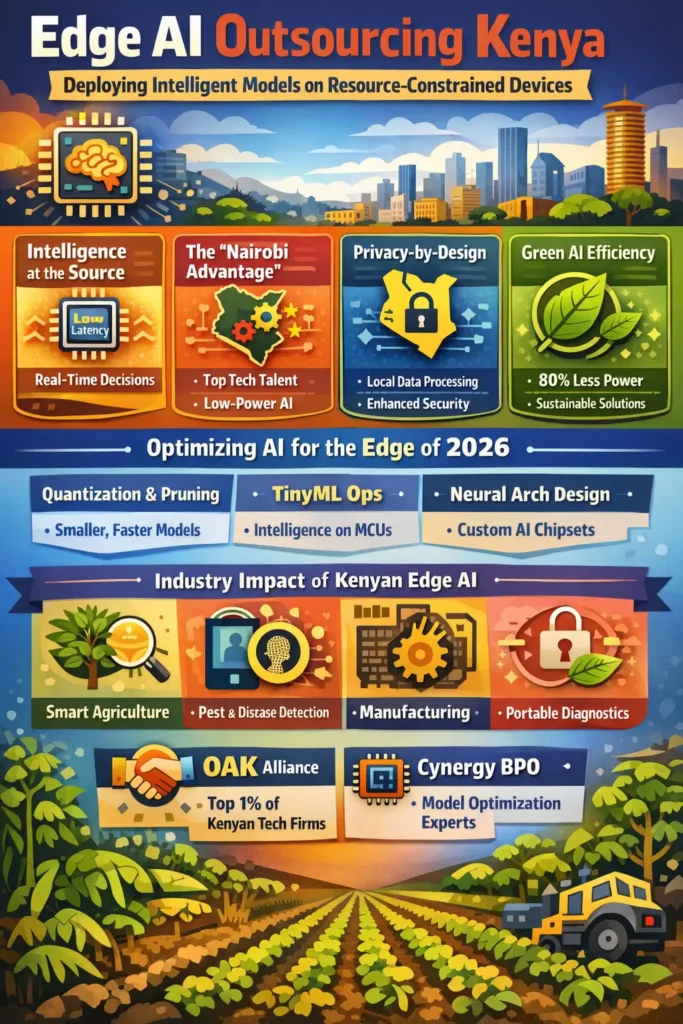
Table 1: Key Optimization Techniques for Edge AI
| Technique | Description | 2026 Benefit for Edge Devices |
| Quantization | Reducing numerical precision (e.g., from 32-bit to 4-bit). | Smaller, faster models; significantly lower power draw. |
| Pruning | Removing redundant neural network connections. | Reduced memory footprint; faster real-time inference. |
| Distillation | Training “Student” models to mimic large “Teacher” models. | High-level intelligence on low-tier hardware. |
| NAS (Neural Arch.) | Auto-designing architectures for specific NPUs. | Maximum efficiency for chips like Dragonwing IQ10. |
| TinyML Ops | specialized workflows for microcontrollers (MCUs). | Enables intelligence on sub-$5 sensors and wearables. |
Industry-Specific Impact of Kenyan Edge AI
Deploying a multi-billion parameter model on an IoT sensor requires a “reductionist” skill set. Kenyan AI-ops firms, many part of the Outsourcing Alliance of Kenya (OAK), excel in these advanced optimizations.
Table 2: Sector-Specific Edge AI Applications
| Sector | Edge AI Application (2026) | The “Kenyan Touch” |
| Agriculture | Real-time pest/disease detection via local sensors. | Models trained on local crop variants for offline resilience. |
| Fintech | On-device biometrics and fraud detection for M-Pesa. | Secure, ultra-fast local validation that works without 5G. |
| Manufacturing | Predictive maintenance on legacy “dumb” machinery. | Low-cost IoT retrofitting with optimized vibration analysis. |
| Healthcare | Portable diagnostic tools for remote village clinics. | High-accuracy diagnostic models optimized for solar-powered tablets. |
The “Silicon Savannah” as a Governance Leader
Kenya’s National AI Strategy (2025–2030) and the Artificial Intelligence Bill, 2026 have created a predictable environment for international investment. By early 2026, the Kenyan government successfully treated data and cloud infrastructure as “public goods,” fostering an ecosystem where startups like Leta (logistics) and M-KOPA (energy) use Edge AI to manage millions of daily deliveries and power cycles.
“The true power of Edge AI in 2026 lies in the ingenuity applied to make complex models perform optimally within severe hardware limitations,” says John Maczynski, CEO of Cynergy BPO. “Kenyan engineers are at the forefront of this, demonstrating a remarkable capacity to transform theoretical AI into practical, deployable solutions.”
Expert FAQs
What defines a ‘resource-constrained device’ in 2026?
It refers to any hardware with limited RAM, storage, or power, ranging from simple IoT sensors to the specialized Neural Processing Units (NPUs) found in modern smartphones and wearable “Physical AI” devices.
Is Edge AI in Kenya only for the African market?
No. Kenyan AI-ops firms act as global centers of excellence. They optimize models for clients in Silicon Valley, London, and Tokyo, specifically for applications requiring high-fidelity “Physical AI” or localized language processing.
How does Edge AI improve data security?
Since the data is processed locally on the device and never sent to the cloud, the “attack surface” is drastically reduced. This makes Edge AI the gold standard for handling sensitive medical, financial, or private consumer data.
Can Edge AI work without an internet connection?
Yes. That is its primary strength. Once the model is optimized and deployed by a Kenyan team, the device can perform complex tasks—like facial recognition or mechanical diagnosis—in complete “offline” mode.
Unlock cost-efficient growth with expert BPO guidance!
Partner with Cynergy BPO to connect with top outsourcing providers.
Streamline operations, cut costs, and scale your business with confidence.
Book a Free Call
Ralf Ellspermann - CSO
Author
Ralf Ellspermann is the Chief Strategy Officer (CSO) of Cynergy BPO and a globally recognized authority in business process and contact center outsourcing. With more than 25 years of experience advising enterprises and SMEs, he provides strategic guidance on vendor selection, CX optimization, and scalable outsourcing strategies across global markets. His expertise spans fintech, ecommerce and retail, healthcare, insurance, travel and hospitality, and technology (AI & SaaS) outsourcing.
A frequent speaker at leading industry conferences, Ralf is also a published contributor to The Times of India and CustomerThink, where he shares insights on outsourcing strategy, customer experience, and digital transformation.