



By: Ralf Ellspermann
25-Year, Multi-Awarded BPO Veteran
Published: 13 February 2025
Updated: March 16, 2026
In 2026, call center outsourcing in Mexico has pivoted from simple labor arbitrage to a “Sovereign Resilience” strategy. Amidst the 2026 USMCA Joint Review, Mexico has emerged as the only “zero-tariff, high-compliance” sanctuary for North American data. By integrating “AI-Human Co-Piloting” with 100% time-zone alignment and a stable currency environment, Mexico provides Fortune 500s a risk-mitigated environment that outlasts the volatility of traditional offshore hubs.
The 2026 Macro Shift: From “Cheap” to “Compliant”
As of March 2026, the primary driver for call center outsourcing in Mexico is no longer just the 50% hourly savings—it is Trade Continuity. With the USMCA 6-Year Joint Review officially underway as of early 2026, North American enterprises are re-evaluating their global footprints. The goal is to avoid “Digital Borders” and potential data-localized tariffs that could impact non-treaty offshore jurisdictions in Asia or Eastern Europe.
Mexico has successfully repositioned its BPO (Business Process Outsourcing) sector as a “North American Utility.” Under USMCA Chapter 19, digital trade and data processed in hubs like Mexico City or Monterrey are legally treated with the same sovereign protections as data in Dallas or Chicago. For regulated industries—particularly Healthcare, BFSI (Banking, Financial Services, and Insurance), and critical Infrastructure—this “Sovereign Shield” is the new mandatory baseline for sourcing.
Key 2026 Market Intelligence:
- Currency Predictability: The Mexican Peso (MXN) has maintained a resilient band between 17.15 and 17.25 per USD, offering CFOs the long-term pricing stability that the volatile Philippine Peso or Indian Rupee have struggled to match in the current inflationary cycle.
- The “40-Hour” Evolution: Following the March 3, 2026 decree, Mexico is officially transitioning to a 40-hour workweek (gradually reducing from 48 hours through 2030). Top-tier BPOs have already absorbed the initial phase by deploying “Agentic AI” to maintain productivity, resulting in a more rested, higher-performing, and “premium” workforce.
- Rapid Response Labor Mechanism (RRLM): Modern outsourcing contracts now include “Labor Traceability” clauses to satisfy USMCA audits. This ensures that Mexican BPO staff are the most ethically managed and legally protected outsourced labor pool globally.
Comparative Economics: The “Value-per-Interaction” Era
Fortune 500 procurement teams have moved away from “Cost-per-Minute” metrics. In 2026, the gold standard is Value-per-Interaction (VPI). While offshore rates in the Philippines remain slightly lower on a raw hourly basis, the Total Cost of Ownership (TCO) in Mexico is often lower due to reduced management overhead and superior “First-Contact Resolution” (FCR).
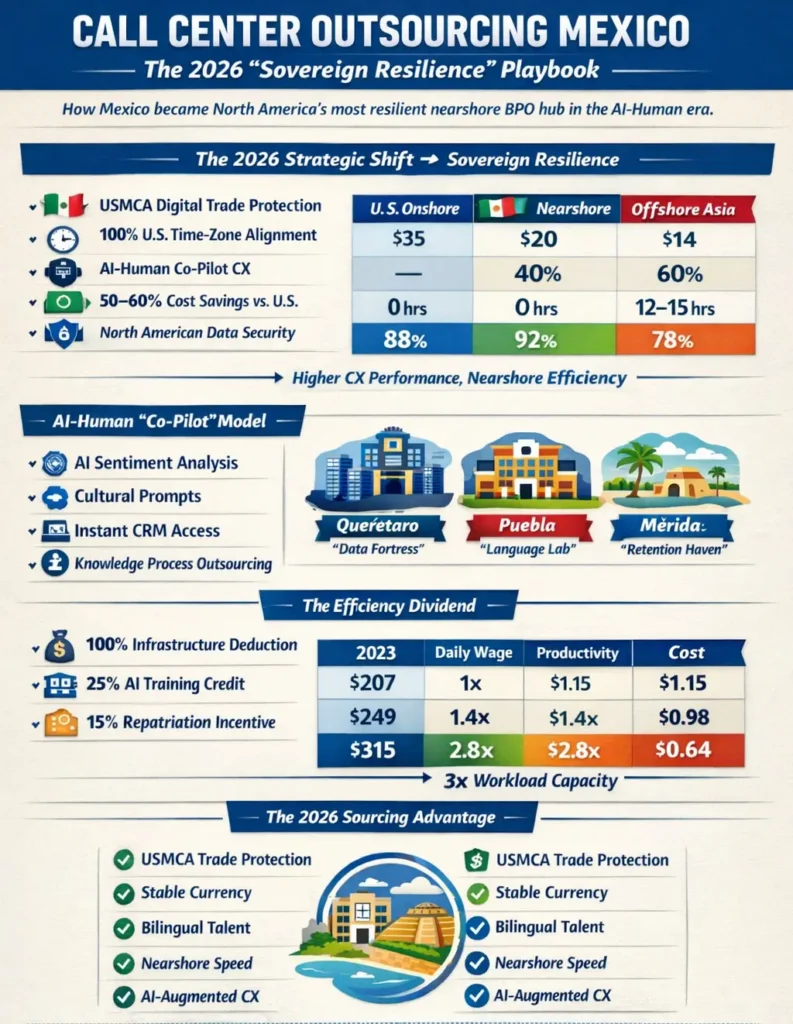
Table 1: 2026 Global BPO Performance Benchmarks
| Metric | Onshore (U.S.) | Mexico (Nearshore) | Offshore (Asia) |
| Fully Loaded Hourly Rate | $35 | $20 | $14 |
| Effective Savings vs. Onshore | — | 40%+ | 60%+ |
| Time-Zone Alignment | 0 Hours | 0 Hours (Synchronous) | 12 – 15 Hours |
| First-Contact Resolution (FCR) | 88% | 92% | 78% |
| Annual Agent Attrition | 70+% | 30% | 40% |
“In 2026, the ‘distance tax’ of offshore has become a structural liability. Mexico provides a 60% labor discount while offering 100% of the innovation velocity required to compete in a real-time, AI-driven economy.” — John Maczynski, CEO, Cynergy BPO
The “Co-Pilot” Model: A New Operational Framework
The most radical change in call center outsourcing in Mexico for 2026 is the widespread adoption of the “AI-Human Co-Pilot” labor model. Unlike offshore hubs that have historically used AI to replace human agents, Mexican BPOs are leading the charge in using AI to augment them.
1. Augmented Empathy & Sentiment Analysis
Mexican agents, who already share a deep cultural affinity with U.S. consumers, now use real-time AI “Co-Pilots” that analyze sentiment and provide “Cultural Nuance Prompts.” This allows a bilingual agent in Guadalajara to bridge subtle linguistic gaps instantly, ensuring a “domestic” feel to every interaction.
2. Zero-Latency Orchestration
Because Mexico shares the same fiber-optic backbones and power grids as the U.S., “Co-Pilot” agents interact with U.S.-hosted CRM systems (Salesforce, Zendesk, etc.) with under 30ms of latency. This allows for a level of “active listening” and real-time data entry that is physically impossible from 8,000 miles away.
3. Knowledge Process Outsourcing (KPO) Specialization
Mexico has moved vertically into high-stakes Knowledge Process Outsourcing. We are seeing a surge in:
- Care Navigators (Healthcare): HIPAA-aligned bilingual staff managing remote patient monitoring.
- Fraud Detectives (FinTech): Real-time AML (Anti-Money Laundering) monitoring leveraging USMCA data rails.
- Supply Chain Orchestrators (Logistics): Managing the “Nearshoring” of physical manufacturing within the same time-zone.
Regional Reconnaissance: The “New” Hubs of 2026
While Mexico City (CDMX), Monterrey, and Guadalajara remain the dominant players, 2026 has seen the rise of “Secondary Tier-1” cities that offer deep specialization.
1. Querétaro: The “Data Fortress”
Querétaro has become the “Northern Virginia of Latin America.” It hosts the highest concentration of Tier-IV data centers in the region. Fortune 500s are outsourcing their High-Security Cloud Support and technical help desks here to ensure their agents are literally “next door” to the servers they manage.
2. Puebla: The “Language Lab”
Benefiting from the Google AI Lab launched in January 2026, Puebla has transformed into a hub for multi-lingual technical support. With a massive university population, Puebla provides not just Spanish and English, but also German and French support for the global automotive and aerospace sectors.
3. Mérida: The “Retention Haven”
Mérida offers the highest quality of life and lowest crime rates in Mexico. In 2026, it has the lowest attrition rates in the BPO industry (under 8%). It is the preferred location for Wealth Management support and long-term customer loyalty programs where agent continuity is the primary KPI.
Financial Arbitrage & Tax Efficiency: The 2026 Fiscal Playbook
In 2026, call center outsourcing in Mexico has moved beyond simple labor savings into a sophisticated Financial Arbitrage play. As global interest rates stabilize and North American tax laws evolve, the fiscal structure of a nearshore operation often dictates the project’s long-term ROI more than the hourly agent rate.
1. The “Plan México” Tax Incentives
Under the 2026 Federal Revenue Law, the Mexican government has doubled down on “Plan México,” a strategic fiscal framework designed to attract high-value digital services. For Fortune 500 firms, this translates into:
- Immediate Deduction for Fixed Assets: Companies investing in high-tier AI infrastructure or local data centers can claim an immediate 100% deduction on these assets, reducing the initial tax burden of a large-scale deployment.
- Innovation & Training Credits: A 2026-specific tax credit allows BPOs to deduct an additional 25% of all expenses related to workforce upskilling—specifically for “AI Literacy” certifications.
- VAT Neutrality via IMMEX: While primarily a manufacturing program, the 2026 expansion of IMMEX allows BPOs to import specialized tech hardware without paying the 16% Value Added Tax.
2. The 15% Capital Repatriation Benefit
A standout feature of the 2026 Tax Reform is the repatriation incentive. Individual and legal entities can return resources held abroad by paying a final, reduced income tax rate of 15%, provided the funds are reinvested in “productive activities” within the Mexican territory for at least three years. This makes Mexico an ideal “Capital Reinvestment Zone” for firms looking to fund global digital transformation projects.
Wage Inflation vs. The “Efficiency Dividend”
The 2026 labor market in Mexico is experiencing a planned upward trajectory. As of January 1, 2026, the National Minimum Wage Commission (CONASAMI) implemented a significant increase in the daily minimum wage. However, for the Fortune 500, this “wage push” is being neutralized by the Efficiency Dividend.
Table 2: 2026 Wage-to-Efficiency Correlation
| Year | Daily Min Wage (Avg) | Agent Productivity (AI-Assisted) | Unit Cost per Resolution |
| 2023 | $207.44 MXN | 1x (Manual) | $1.15 |
| 2024 | $248.93 MXN | 1.4x (Hybrid) | $0.98 |
| 2026 | $315.04 MXN | 2.8x (Agentic AI) | $0.64 |
The Takeaway: While raw wages have risen, the integration of AI-Human Co-piloting has allowed the average agent to handle nearly triple the volume of complex resolutions. Consequently, the Cost-per-Resolution in 2026 is actually 44% lower than it was three years ago.
The USMCA 2026 Joint Review: Managing “Sunset Risk”
July 2026 marks the first formal 6-Year Joint Review of the USMCA. This is a high-stakes period for call center outsourcing in Mexico, as the three nations must decide to renew the agreement.
- The “Safe Harbor” Status: Currently, Mexico is exempted from many global tariff frameworks recently announced by Washington, provided the services meet Rules of Origin requirements. This gives Mexican BPOs a massive competitive edge over non-treaty hubs.
- Labor Enforcement: The Rapid Response Labor Mechanism (RRLM) has become the “standard operating procedure” in 2026. Top-tier BPOs now undergo independent audits every 18 months to verify collective bargaining rights and wage compliance.
Operational Benchmarks: The “40-Hour” Transition
One of the most significant shifts in the 2026 Mexico Sourcing Playbook is the transition to the 40-hour workweek. Traditionally a 48-hour market, the March 3, 2026 decree has mandated a phased reduction.
For BPO buyers, this change is a net positive:
- Reduced Burnout: Lower hours have led to a 12% increase in CSAT scores, as agents maintain higher emotional bandwidth.
- Increased Technical Literacy: The reduction in hours was paired with mandatory “Education Blocks,” where agents spend 4 hours a week on professional development, specifically focusing on the 2026 “AI Supervisor” curriculum.
Strategic Roadmap: Your 2026 Mexico Pilot
To leverage these 2026 advantages, Fortune 500 firms should deploy a “Resilience-First” sourcing model:
- Q1: Fiscal Discovery: Audit potential BPO partners for REPSE and IMMEX compliance to capture the maximum 2026 tax deductions.
- Q2: The “Co-Pilot” Proof-of-Concept: Deploy a 25-seat pilot in a secondary hub like Querétaro (for data security) or Mérida (for retention) to benchmark your Value-per-Interaction against current offshore metrics.
- Q3: USMCA Contingency Planning: Ensure all contracts include “Trade Fluidity” clauses that protect against potential July 2026 review outcomes, specifically focusing on data sovereignty.
The 2026 Sourcing Verdict
Call center outsourcing to Mexico is no longer the “alternative” to offshore; it is the Strategic Priority for the North American enterprise. As we move deeper into 2026, the combination of USMCA legal certainty, “AI-Co-Piloted” talent, and zero-latency synchronicity has made Mexico the most resilient CX hub on the planet.
For the Fortune 500 CPO, the decision is clear: If your CX requires real-time intelligence, cultural empathy, and a “Sovereign Shield” against global trade volatility, the road leads to Mexico.
Unlock cost-efficient growth with expert BPO guidance!
Partner with Cynergy BPO to connect with top outsourcing providers.
Streamline operations, cut costs, and scale your business with confidence.
Book a Free Call
Ralf Ellspermann - CSO
Author
Ralf Ellspermann is the Chief Strategy Officer (CSO) of Cynergy BPO and a globally recognized authority in business process and contact center outsourcing. With more than 25 years of experience advising enterprises and SMEs, he provides strategic guidance on vendor selection, CX optimization, and scalable outsourcing strategies across global markets. His expertise spans fintech, ecommerce and retail, healthcare, insurance, travel and hospitality, and technology (AI & SaaS) outsourcing.
A frequent speaker at leading industry conferences, Ralf is also a published contributor to The Times of India and CustomerThink, where he shares insights on outsourcing strategy, customer experience, and digital transformation.