



By: Ralf Ellspermann
25-Year, Multi-Awarded BPO Veteran
Published: 19 March 2026
Updated: March 19, 2026
TL;DR: The Key Takeaway
In 2026, India has transcended its role as a high-volume data hub to become the global epicenter for “High-Fidelity AI-Ops.” By integrating a massive STEM-educated workforce with the stringent Digital Personal Data Protection Act (DPDPA) 2026 and the IndiaAI Mission infrastructure, India provides the specialized biomechanical, linguistic, and ethical grounding required for safe, mission-critical artificial intelligence.
30-Second Executive Briefing
- Regulatory Milestone: The DPDPA 2026 is now fully operational, mandating rigorous data provenance and consent-based labeling, making India a global governance pillar alongside the GDPR.
- Sovereign Infrastructure: The IndiaAI Mission has deployed over 38,000 GPUs via the Shakti Cloud, enabling Indian labeling firms to offer integrated “Labeling-as-a-Service” (LaaS) on indigenous high-performance compute.
- Synthetic Content Mandate: New IT Amendment Rules (Feb 2026) require mandatory labeling of all synthetic media (SGI), fueling a massive surge in forensic-level metadata tagging and watermarking services.
- The Talent Moat: With a constant influx of engineers from IITs and NITs, the workforce has shifted toward “Intelligence Arbitrage,” focusing on complex 4D kinematics, medical-grade diagnostics, and RLHF.
- Strategic Value: Outsourcing to India has migrated from cost-reduction to “Capability Augmentation,” where Indian teams function as the core R&D arm for global computer vision and LLM leaders.
The 2026 Shift: From Data Cleaning to “Intelligence Arbitrage”
By March 2026, the global AI industry has moved past “commodity labeling.” The demand for simple bounding boxes has been replaced by a need for High-Order Reasoning. India has capitalized on this by leveraging its unique educational architecture to offer “Intelligence Arbitrage”—the value gained when data is annotated by specialists who understand the underlying physics, biology, and logic of the subject matter.
“Data Labeling Outsourcing to India” now represents a sophisticated tier of AI development. Whether it is a surgical robot requiring sub-millimeter anatomical precision or an autonomous vehicle navigating the chaotic “edge cases” of urban traffic, Indian specialists apply a human-in-the-loop layer that automated tools cannot replicate. This has transformed the Indian BPO sector into a network of “AI Studios” that provide physically-aware and culturally-nuanced training sets for the world’s most ambitious models.
The Regulatory Shield: DPDPA 2026 and IT Rules
The most significant differentiator for India in 2026 is its robust legal framework. The Digital Personal Data Protection Act (DPDPA) has moved from legislation to a lived reality. This act, combined with the February 2026 IT Rules, mandates that all AI-generated or modified content (SGI) must be prominently labeled and embedded with permanent metadata markers.
For global enterprises, this means that Indian labeling partners act as Compliance Guardians. They don’t just tag data; they ensure every pixel and string of text adheres to global transparency standards. This is critical for brands looking to avoid the “safe harbor” losses and massive fines associated with unlabeled deepfakes or non-consensual synthetic media.
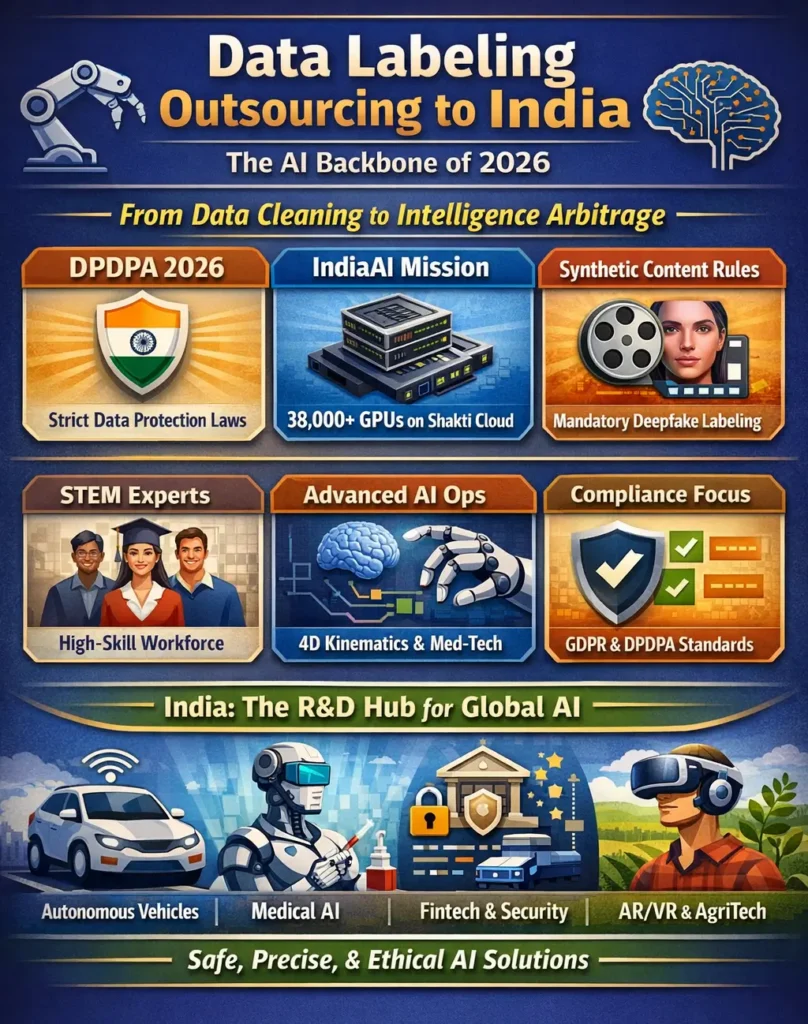
Table 1: The Evolution of the Indian Labeling Model
The following comparison highlights how India has elevated its standard of training data for the 2026 market.
| Feature | Legacy Data Entry (Pre-2025) | Indian AI-Ops Hub (2026) |
| Primary Task | 2D Bounding Boxes | 4D Kinematic & Biomechanical Mapping |
| Workforce | Generalist / Entry-level | STEM-educated / Subject Matter Experts |
| Tech Stack | Tool-agnostic / Client-led | Integrated with Shakti Cloud (Sovereign GPU) |
| Regulatory Status | Unregulated / High-risk | DPDPA 2026 & IT Rules Compliant |
| Core Value | Cost Savings | Model Precision & Ethical Provenance |
Strategic Infrastructure: The IndiaAI Mission
In 2026, data labeling in India is powered by a national-scale infrastructure. The IndiaAI Mission has successfully democratized access to high-end compute, providing over 3,000 next-generation GPUs for sovereign and strategic AI applications. This allows Indian labeling firms to offer “Compute-Integrated Labeling,” where data is processed, labeled, and used for initial model-tuning all within the same secure, high-speed environment.
This “AI Stack” approach ensures that data never leaves the high-security Indian sovereign cloud, satisfying the most stringent data residency requirements of global finance and defense sectors. By bridging the gap between raw data and compute-ready intelligence, India has secured its position as the world’s “back office” for the neural networks of tomorrow.
Table 2: High-Impact Application Sectors in India
Different AI domains now rely on specific clusters of Indian expertise.
| Application | Complexity Level | Necessary Knowledge | Impact on AI Reliability |
| Autonomous Mobility | Extreme | LiDAR, Sensor Fusion, Physics | Prevents navigation errors in high-density traffic. |
| Med-Tech / Digital Health | Critical | Anatomy, Radiology, Pathology | Enables 99.5% accuracy in early cancer detection. |
| Agentic AI / Fintech | High | Intent Mapping & Financial Workflows | Drives autonomous, fraud-aware banking agents. |
| Sports & AR/VR | Very High | 4D Biometrics & Motion Tracking | Optimizes athletic performance and immersive gaming. |
| Climate & AgTech | Moderate | Geospatial & Multispectral Analysis | Predicts crop yields and monitors carbon credits. |
Expert Insights: Navigating the Indian AI-Ops Landscape
How does the DPDPA 2026 affect my cross-border data flows?
The DPDPA allows for cross-border transfers but requires the Data Fiduciary (the client) to ensure the Data Processor (the Indian partner) follows strict security and deletion protocols. Top Indian firms now provide automated “Right to Erasure” and “Consent Management” tools built directly into their labeling platforms to ensure you stay compliant.
What is “Deepfake Forensic Labeling”?
Under the new 2026 IT Rules, all synthetic content must be tagged within 3 hours of creation. Indian teams now offer specialized forensic services that embed permanent digital watermarks and metadata “DNA” into AI-generated media, allowing for complete traceability across the internet.
Can I use the IndiaAI GPU cluster for my project?
Yes. Through partnerships with Indian AI-ops firms, international startups and enterprises can access subsidized GPU rates under the IndiaAI Mission. This “Compute-as-a-Service” model combined with expert labeling can reduce your R&D costs by up to 40%.
How does Cynergy BPO vet Indian partners in this high-tech era?
We have shifted from auditing “speed” to auditing “Technical Depth.” We verify that our Indian partners have a high ratio of STEM graduates, proven experience with multimodal LLM tuning, and the infrastructure to maintain 5-year audit trails required by the 2026 regulations.
Unlock cost-efficient growth with expert BPO guidance!
Partner with Cynergy BPO to connect with top outsourcing providers.
Streamline operations, cut costs, and scale your business with confidence.
Book a Free Call
Ralf Ellspermann - CSO
Author
Ralf Ellspermann is the Chief Strategy Officer (CSO) of Cynergy BPO and a globally recognized authority in business process and contact center outsourcing. With more than 25 years of experience advising enterprises and SMEs, he provides strategic guidance on vendor selection, CX optimization, and scalable outsourcing strategies across global markets. His expertise spans fintech, ecommerce and retail, healthcare, insurance, travel and hospitality, and technology (AI & SaaS) outsourcing.
A frequent speaker at leading industry conferences, Ralf is also a published contributor to The Times of India and CustomerThink, where he shares insights on outsourcing strategy, customer experience, and digital transformation.