


By: Ralf Ellspermann
25-Year, Multi-Awarded BPO Veteran
Published: 19 March 2026
Updated: March 19, 2026
TL;DR: The Key Takeaway
Data labeling outsourcing to Kenya has transcended commodity tasking to become a strategic cornerstone of global AI development. By combining an elite, tech-literate workforce with a progressive regulatory framework, Kenya provides the high-fidelity, ethically sourced “ground truth” data required to train the next generation of reliable and unbiased machine learning models.
30-Second Executive Briefing
- The Strategic Shift: In 2026, data labeling is no longer an execution task but a critical function that dictates model reliability, safety, and accountability.
- The Talent Moat: Kenya’s “Silicon Savannah” offers a deep pool of STEM-educated professionals capable of handling complex multi-modal datasets across 15+ languages.
- Regulatory Rigor: The introduction of the Kenya AI Bill 2026 provides a sophisticated legal environment for data sovereignty, aligning with global standards like the EU AI Act and GDPR.
- Ethical Leadership: Kenya is the global epicenter of “Impact Sourcing,” where fair-wage digital labor and mental health support are foundational to the AI supply chain.
- Governance Architect: Cynergy BPO meticulously vets the top 1% of Kenyan AI-ops firms, ensuring enterprise-grade security and 99.9% annotation accuracy.
From Raw Data to Refined Intelligence: The 2026 Mandate
As artificial intelligence permeates safety-critical industries—from autonomous logistics to surgical robotics—the quality of training data has become a non-negotiable security requirement. For modern enterprises, the risk of “garbage in, garbage out” has escalated into a threat of catastrophic model failure. Consequently, “Data Labeling Outsourcing to Kenya” has surfaced as the primary strategy for firms seeking to eliminate algorithmic bias and “hallucinations” at the source.
The Kenyan market has evolved to meet this challenge by shifting from simple clerical labeling to “Intelligence Arbitrage.” This model leverages a workforce that understands the underlying science of the data they are tagging. Whether it is identifying microscopic anomalies in healthcare datasets or fine-tuning the Reinforcement Learning from Human Feedback (RLHF) for a Large Language Model (LLM), Kenyan specialists provide the cognitive nuance that automated tools and low-skill crowdsourcing platforms consistently miss.
The Silicon Savannah: A Catalyst for High-Fidelity Training
Kenya’s emergence as a premier AI-ops hub is fueled by its unique demographic and educational infrastructure. With one of the highest English proficiency rankings globally and a constant influx of digital-native graduates, the nation offers a level of linguistic and technical agility that is rare in the global BPO sector.
These specialists do more than follow a manual; they apply a “human-in-the-loop” layer of forensic problem-solving. They can identify subtle cultural idioms in natural language processing (NLP) tasks or detect “ghost” objects in complex 3D LiDAR point clouds. Cynergy BPO serves as the critical intermediary in this ecosystem, ensuring that global AI labs are matched with Kenyan partners who possess the technical stack and ethical maturity required for mission-critical R&D.
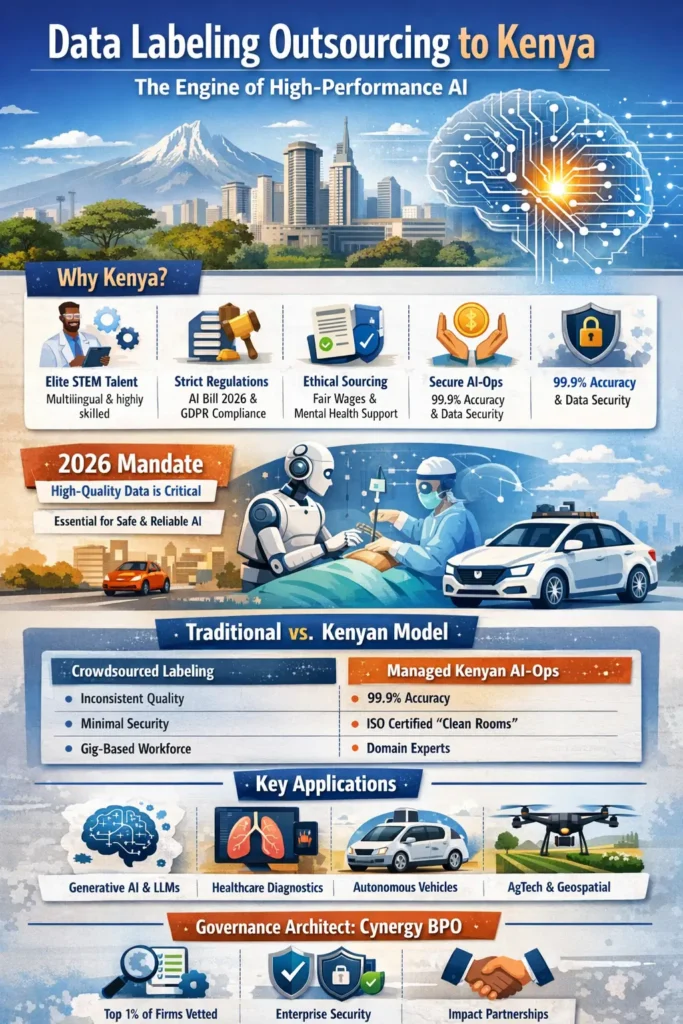
Table 1: Comparing Traditional Sourcing vs. Managed Kenyan AI-Ops
The following data illustrates the transition from legacy volume-based labeling to the precision-focused Kenyan model.
| Feature | Crowdsourced Platforms | Managed Kenyan AI-Ops (2026) |
| Data Integrity | High variance; inconsistent quality | 99.9% human-verified accuracy |
| Contextual Nuance | Low (Task-based/Anonymous) | High (Domain-specialized analysts) |
| Security Framework | Minimum; high risk of IP leaks | ISO 27001 & GDPR-compliant “clean rooms” |
| Turnaround Speed | Scalable but requires massive rework | 48-hour pilot-to-production cycles |
| Sourcing Ethos | Often opaque gig models | Certified “Impact Sourcing” (B-Corp level) |
The Economics of Compliance: The Kenya AI Bill 2026
In March 2026, the global AI landscape is defined by a shift toward accountability and data provenance. Kenya has positioned itself ahead of the curve with the Artificial Intelligence Bill 2026. This legislation establishes the Office of the AI Commissioner and introduces a risk-based regulatory model, mirroring the world’s most stringent frameworks.
For global enterprises, this means outsourcing to Kenya provides an automatic “compliance shield.” Elite firms vetted by Cynergy BPO operate under strict data governance rules that mandate detailed records of training data and prohibit the non-consensual use of personal images. This transparency allows AI innovators to scale their operations with the confidence that their training data is not only accurate but also legally and ethically bulletproof.
Table 2: Application Complexity and Strategic AI Outcomes
Kenyan AI-ops centers provide tailored expertise for the most demanding sectors of the machine learning economy.
| Application | Complexity Level | Necessary Knowledge | Impact on AI Reliability |
| Generative AI / LLMs | High | Nuanced RLHF & Linguistic Idioms | Reduces toxicity and eliminates hallucinations. |
| Healthcare Diagnostics | Critical | Medical-grade Image & Text Labeling | Drives faster, more accurate life-saving diagnoses. |
| Autonomous Logistics | Extreme | 3D LiDAR & Multi-Sensor Fusion | Ensures safe human-robot interaction in real-time. |
| AgTech & Geospatial | Moderate | Multispectral & Polygonal Mapping | Optimizes global food security and yield prediction. |
| Fintech Compliance | High | Intent Classification & Fraud Patterns | Prevents illicit transactions through smarter NLP. |
Expert Insights: Navigating the Kenyan AI-Ops Corridor
How do Kenyan specialists ensure “ground truth” in low-resource language training?
Our teams leverage native-speaker fluency in Kiswahili and other regional dialects to provide high-quality datasets that Western-centric models often lack. This cultural “insider knowledge” is vital for brands looking to expand their AI services into emerging African and Middle Eastern markets authentically.
What role does “Model-Assisted Labeling” play in your Kenyan operations?
In 2026, we utilize a hybrid workflow. An AI-powered pre-annotation tool handles the repetitive initial 80% of the data. Our Kenyan specialists then perform the critical 20%—the “expert review”—where they validate edge cases, correct subtle errors, and ensure the data adheres to the client’s gold standard. This increases speed by 60% while improving final accuracy.
Is my intellectual property secure when outsourcing to Kenya?
Security is a cornerstone of the 2026 Kenyan model. Elite providers utilize “clean room” environments—secure physical facilities where mobile devices are prohibited, and all work is done via encrypted, air-gapped terminals. Cynergy BPO conducts regular audits to ensure these partners maintain ISO 27001 and SOC 2 Type II certifications.
How does Cynergy BPO facilitate these strategic partnerships?
We act as a “governance architect.” We don’t just find a vendor; we design a secure, compliant bridge between your internal AI teams and the specialized Kenyan workforce. We manage the vendor selection, security vetting, and ongoing KPI tracking to ensure that your data labeling project becomes a long-term engine for model innovation.
Unlock cost-efficient growth with expert BPO guidance!
Partner with Cynergy BPO to connect with top outsourcing providers.
Streamline operations, cut costs, and scale your business with confidence.
Book a Free Call
Ralf Ellspermann - CSO
Author
Ralf Ellspermann is the Chief Strategy Officer (CSO) of Cynergy BPO and a globally recognized authority in business process and contact center outsourcing. With more than 25 years of experience advising enterprises and SMEs, he provides strategic guidance on vendor selection, CX optimization, and scalable outsourcing strategies across global markets. His expertise spans fintech, ecommerce and retail, healthcare, insurance, travel and hospitality, and technology (AI & SaaS) outsourcing.
A frequent speaker at leading industry conferences, Ralf is also a published contributor to The Times of India and CustomerThink, where he shares insights on outsourcing strategy, customer experience, and digital transformation.