


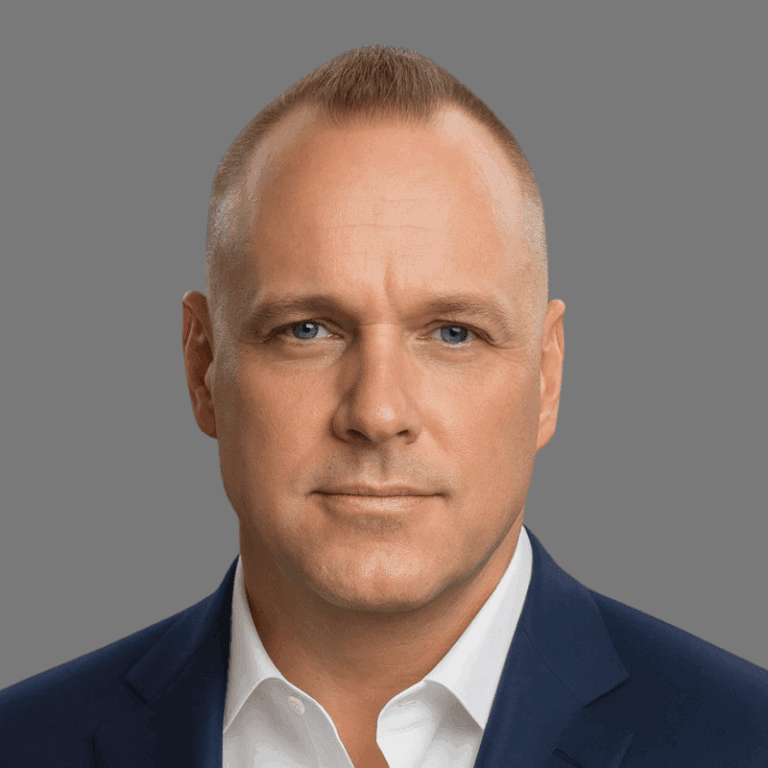
By: Ralf Ellspermann
25-Year, Multi-Awarded BPO Veteran
Published: 24 February 2026
Updated: February 24, 2026
30-Second Executive Briefing
- The 2026 Shift: India has moved from “collection calls” to Predictive Yield Modeling. Leveraging the IndiaAI Mission’s compute power, AR agents now prioritize claims based on “Probability of Liquidation” rather than simple age.
- The Tech Edge: Agentic AR Workflows use Large Action Models (LAMs) to autonomously appeal technical denials and reconcile underpayments across thousands of payer-specific contracts in real-time.
- Performance Impact: U.S. health systems report a 35–40% reduction in Days Sales Outstanding (DSO) and a 25% increase in recovery per FTE.
- Compliance: The DPDP Act 2026 enforcement has codified “Data Ephemeralization,” where patient data is processed in-memory and never stored locally in India.
Deep Dive: The Rise of the “Resolution Agent”
In 2026, the fundamental breakthrough is the transition from Robotic Process Automation (RPA) to Agentic Process Automation (APA). While legacy bots could only check a claim status, Indian “Resolution Agents” now possess Multi-Step Reasoning.
When a claim is denied for “Medical Necessity,” the agent doesn’t just flag it for a human. It autonomously queries the clinical data warehouse, identifies the specific missing documentation (e.g., a specific diagnostic image or a prior authorization token), attaches it to an electronic appeal, and submits it through the payer’s API. This Autonomous Appeal Loop has effectively eliminated the “90-day bucket” for technical denials.
Intelligence Arbitrage: The $1.2B Sovereign AI Edge
The Indian government’s $1.2 billion investment in the IndiaAI Mission has provided BPO centers with subsidized access to 58,000+ GPUs. This allows vendors to run Hyper-Local LLMs trained specifically on U.S. payer contracts. These models can detect “Contractual Variance” in real-time—identifying when a payer has underpaid a claim by even a few cents based on a specific 2026 rate schedule. For a billion-dollar health system, this “micro-leakage” often accounts for $5M–$10M in lost annual revenue.
“We are moving from Labor Arbitrage to Compute Arbitrage,” says John Maczynski, CEO of Cynergy BPO. “The value isn’t that the person is in India; it’s that the AI agent they manage has the processing power of a supercomputer to audit every single claim against 100% of contract terms.”
Table 1: AR Transformation Benchmarks (2024 vs. 2026)
| Metric | Legacy AR Model (2024) | Agentic India Hub (2026) | Strategic Impact |
| DSO (Days Sales) | 45–55 Days | < 30 Days | 40% Faster Cash Access |
| Appeal Success Rate | 45% (Manual) | 88% (AI-Optimized) | Doubled Recovery Value |
| Workforce Allocation | 80% Routine / 20% Complex | 5% Routine / 95% Complex | High-value clinical nuance focus |
| Underpayment Detection | Periodic Audits | Real-Time Automated | Zero Leakage on Payer Contracts |
Solving the OBBBA Compliance Puzzle
The One Big Beautiful Bill Act (OBBBA) mandates that patients receive a single, consolidated bill covering all facility and professional fees. Indian AR hubs have positioned themselves as the “Consolidation Layer.” Using Cross-Domain Agents, Indian centers pull data from disparate facility systems (Epic/Cerner) and professional billing platforms. These agents verify that the Good Faith Estimate (GFE) matches the final bill. If a discrepancy is found, a “Reconciliation Agent” automatically adjusts the fee based on pre-set contract rules to ensure the patient receives a compliant bill within the 72-hour legal window, shielding the provider from OBBBA penalties.
Table 2: 2026 Yield Optimization Impact
| Component | In-House US (Legacy) | India Agentic Hub (2026) | Performance Gain |
| Cost to Collect | 3.5% of Revenue | 1.2% of Revenue | 65% Cost Savings |
| Bad Debt Write-offs | 5.2% | 1.8% | 65% Reduction in Loss |
| Resolution Time | 14 Days (Per Denial) | < 24 Hours | Immediate Cycle Health |
Security: The “Zero-Possession” Model
Under the DPDP Act 2026, Indian hubs have eliminated “Offshore Data Center” risk. Through Pixel-Streaming Virtual Desktop Infrastructure (VDI), Indian coders work on data that remains on U.S. soil. The data is never “stored” in India; it is simply “rendered” there for the agent to process. This Ephemeral Processing satisfies the most stringent HIPAA requirements while allowing Indian hubs to utilize their superior technical talent.
Table 3: Technical Capabilities of 2026 Indian AR Hubs
| Capability | Legacy BPO (2024) | Agentic Hub (2026) | Technology Stack |
| Denial Prediction | Reactive (Post-Denial) | Predictive (Pre-Submission) | IndiaAI GPU Clusters |
| Payer Interaction | Portal Scraping | Large Action Models (LAMs) | Multi-Agent Orchestration |
| Data Residency | Encrypted Storage | Zero-Possession (VDI) | DPDP Act 2026 Compliance |
| Audit Defense | Sampling (5-10%) | 100% Automated Audit | Blockchain-Verified Logs |
The Verdict on AR Yield
“In 2026, the win is for health systems that partner with Indian hubs providing their own compute power and ‘Digital Teammates’,” notes John Maczynski, CEO of Cynergy BPO. “The gold standard is a partner that brings their own agents and a 100% guarantee on OBBBA compliance.”
FAQ: Healthcare AR Outsourcing 2026
Q: How does the IndiaAI Mission lower my costs?
Access to 58,000+ subsidized GPUs allows BPOs to run massive AI models for auditing at a fraction of the cost of US-based cloud providers.
Q: What is “Resolution Velocity”?
A 2026 KPI measuring the speed from “Claim Denied” to “Cash in Bank.” Indian hubs aim for a <24-hour resolution for all technical denials.
Q: Is Indian AR secure under the DPDP Act?
Yes. Pixel-streaming VDI ensures data never physically resides on an offshore hard drive, virtually eliminating local data breach risks.
Unlock cost-efficient growth with expert BPO guidance!
Partner with Cynergy BPO to connect with top outsourcing providers.
Streamline operations, cut costs, and scale your business with confidence.
Book a Free Call
Ralf Ellspermann - CSO
Author
Ralf Ellspermann is the Chief Strategy Officer (CSO) of Cynergy BPO and a globally recognized authority in business process and contact center outsourcing. With more than 25 years of experience advising enterprises and SMEs, he provides strategic guidance on vendor selection, CX optimization, and scalable outsourcing strategies across global markets. His expertise spans fintech, ecommerce and retail, healthcare, insurance, travel and hospitality, and technology (AI & SaaS) outsourcing.
A frequent speaker at leading industry conferences, Ralf is also a published contributor to The Times of India and CustomerThink, where he shares insights on outsourcing strategy, customer experience, and digital transformation.