


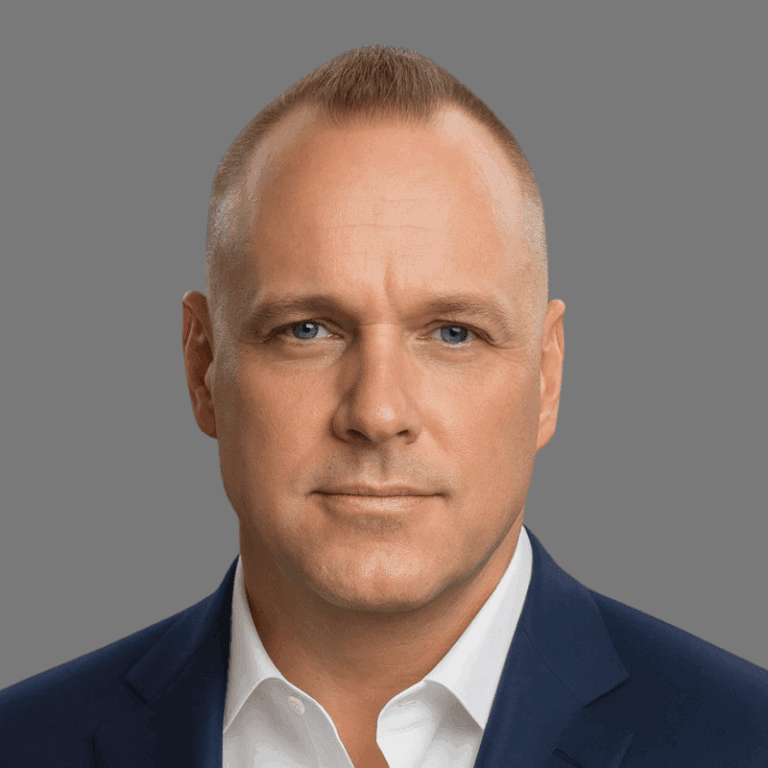
By: Ralf Ellspermann
25-Year, Multi-Awarded BPO Veteran
Published: 24 February 2026
Updated: February 24, 2026
30-Second Executive Briefing
- The 2026 Paradigm: India has moved from manual adjudication to Agentic Claims Autonomy, utilizing the IndiaAI Mission’s 58,000-GPU stack to handle 85% of claims without human intervention.
- The Tech Edge: Transition from legacy RPA to Large Action Models (LAMs) allows AI agents to autonomously query medical records and resolve complex pended claims.
- Performance Impact: Providers and payers partnering with Indian hubs report a 40% reduction in operational costs and a surge in Resolution Velocity over traditional AHT metrics.
- Compliance & Risk: Full enforcement of the DPDP Act 2026 and HITRUST CSF v11.7 provides a “Zero-Trust” framework that exceeds domestic U.S. security standards.
In 2026, the global healthcare sector has reached a critical inflection point. With medical data volumes exceeding 180 zettabytes, the “human-only” model for claims processing has collapsed under the weight of its own complexity. India has seized this moment, transforming from a back-office utility into a global Intelligence Hub.
By leveraging the IndiaAI Mission’s subsidized compute (now as low as ₹65/hour), Indian BPO centers have pioneered Agentic Claims Processing, where AI agents possess the “accountable execution” required to finalize a claim from submission to payment.
Expert Deep Dive: From RPA to Agentic “Digital Teammates”
The fundamental breakthrough in 2026 is the deployment of Agentic AI Agents—digital entities that don’t just “chat” but “do.” While 2024-era automation stalled when it hit a missing field or a UI change in a payer portal, 2026 Agents in India exhibit Situational Awareness through Large Action Models (LAMs).
In these advanced hubs, the workflow is managed by a Multi-Agent Orchestration (MAO) layer. For example, when a high-cost claim is flagged for a medical necessity review, a “Planner Agent” decomposes the task. It dispatches an “Evidence Agent” to navigate the provider’s EHR via FHIR APIs to retrieve specific lab results, while a “Verifier Agent” checks the output against the latest HITRUST CSF v11.7 and payer-specific clinical protocols. This autonomous cycle has reduced the need for human intervention in pended claims by 42%.
Expert Insight: Intelligence over Labor
John Maczynski, CEO of Cynergy BPO and a featured authority at the World Health Care Congress, notes:
“In 2026, we’ve decoupled growth from headcount. Success is no longer measured by how many people are in a seat, but by Resolution Velocity. Our Indian partners are now using ‘Resolution Architects’—highly skilled clinicians who only step in when the AI Agent hits a 1% outlier case. This is Intelligence Arbitrage at its finest.”
Table 1: The Adjudication Evolution (2024 vs. 2026)
| Feature | Legacy BPO (2024) | Agentic India Hub (2026) | Strategic Benefit |
| Error Handling | Claim pends for human review. | Agentic query resolves the gap. | -42% reduction in pended claims. |
| Policy Updates | Manual retraining of staff. | Neural update to the Agentic Stack. | Instant compliance with new laws. |
| Complexity | Limited to “Simple” claims. | Handles 80% of high-complexity cases. | Massive OpEx reduction. |
| Metric | Average Handle Time (AHT) | Resolution Velocity | Focus on outcomes, not activity. |
Solving Claims Leakage and Underpayments
Claims leakage—revenue lost to inefficient processing and “silent” underpayments—is a $360 billion problem. Indian hubs in 2026 utilize Predictive Denial Modeling. Before a claim is ever sent to the payer, an AI “Champion-Challenger” model simulates the payer’s likely response using a digital twin of their adjudication engine.
If the model predicts a high probability of denial, the agent automatically triggers a Clinical Documentation Improvement (CDI) workflow. This proactive stance has helped U.S. health systems recover millions in revenue that previously went unnoticed by human adjusters, moving the focus from “pay and chase” to “prevent and protect.”
Technical Deep Dive: The “Zero-Possession” Security Model
With the DPDP Act 2026 fully active, Indian hubs have eliminated the traditional “Offshore Data Center” risk. Through Pixel-Streaming Virtual Desktop Infrastructure (VDI), Indian coders and AI agents work on data that remains on U.S. soil.
The data is never “stored” in India; it is simply “rendered” there for the agent to process. This Ephemeral Processing satisfies the most stringent HIPAA requirements while allowing Indian hubs to utilize their superior technical talent. Furthermore, the 2026 transition to HITRUST CSF v11.7 ensures that these environments are “Cyber Threat-Adaptive,” automatically updating defenses against evolving credential theft and ransomware tactics.
Table 2: 2026 Performance Benchmarks
| Metric | US In-House (2026) | India Agentic Hub (2026) | Efficiency Gain |
| First-Pass Clean Rate | 81% | 99.4% | +18.4% Accuracy |
| Adjudication Cycle | 12 Days | < 24 Hours | 91% Speed Improvement |
| Cost per Adjudication | $8.50 | **$1.85** | 78% Cost Reduction |
| Security Standard | SOC 2 Type II | HITRUST CSF v11.7 (r2) | Adaptive Threat Protection |
Strategic Verdict: Decoupled Growth and Sovereign AI
As we navigate 2026, the question is no longer if you should outsource, but how fast you can transition to an autonomous model. “The days of ‘butts-in-seats’ outsourcing are over,” says Ralf Ellspermann, CSO of Cynergy BPO. “The new gold standard is a partner that brings their own compute, their own agents, and a 100% guarantee on compliance.”
By utilizing India’s Sovereign AI Stack—localized clinical models like BharatGen Param2—vendors avoid the “OpenAI Tax” (high API costs), passing these savings directly to U.S. health systems. This allows for infinite scalability without the hiring lag that once plagued the industry.
FAQ: Healthcare Claims Processing 2026
Q: How does the IndiaAI Mission impact claims processing?
A: It has democratized high-end compute. Indian vendors access over 58,000 GPUs at subsidized rates (₹65/hour), allowing them to build “Small Language Models” (SLMs) that are 10x more accurate for specific clinical claims than generic public AI models.
Q: What is “Resolution Velocity”?
A: In 2026, we’ve replaced Average Handle Time (AHT) with Resolution Velocity. It measures how quickly an AI agent can reach a final, accurate outcome (payment or valid denial) without human hand-offs.
Q: Is Indian claims processing compliant with the 2026 DPDP Act?
A: Yes. Leading Indian hubs utilize “Zero-Possession” security architectures. They use biometric MFA and pixel-streaming VDI, ensuring data is never stored locally and remains compliant with both HIPAA and India’s DPDP Act.
Unlock cost-efficient growth with expert BPO guidance!
Partner with Cynergy BPO to connect with top outsourcing providers.
Streamline operations, cut costs, and scale your business with confidence.
Book a Free Call
Ralf Ellspermann - CSO
Author
Ralf Ellspermann is the Chief Strategy Officer (CSO) of Cynergy BPO and a globally recognized authority in business process and contact center outsourcing. With more than 25 years of experience advising enterprises and SMEs, he provides strategic guidance on vendor selection, CX optimization, and scalable outsourcing strategies across global markets. His expertise spans fintech, ecommerce and retail, healthcare, insurance, travel and hospitality, and technology (AI & SaaS) outsourcing.
A frequent speaker at leading industry conferences, Ralf is also a published contributor to The Times of India and CustomerThink, where he shares insights on outsourcing strategy, customer experience, and digital transformation.