


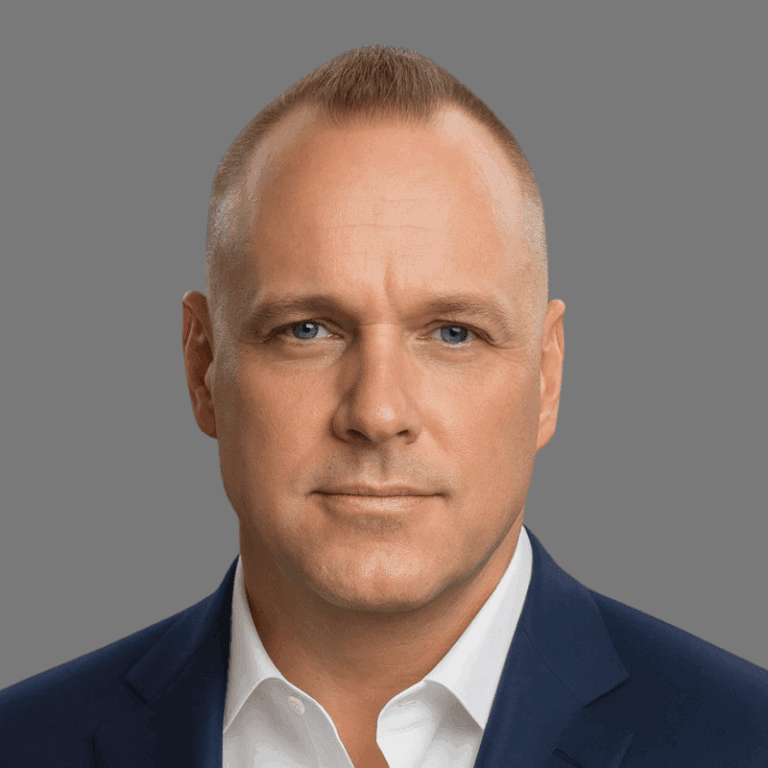
By: Ralf Ellspermann
25-Year, Multi-Awarded BPO Veteran
Published: 24 February 2026
Updated: February 24, 2026
2026 Support Paradigm
- Beyond Inbound Support: The industry has transitioned to Proactive Care Advocacy, where AI-human teams anticipate patient needs before they become escalations.
- The Sovereign Advantage: Support hubs utilize the IndiaAI Mission’s 58,000-GPU stack to run low-latency Medical Small Language Models (SLMs) for real-time sentiment analysis.
- Frictionless Access: By early 2026, Indian hubs have reduced “Member Effort” scores by 65% through the integration of Voice-AI Navigators.
- Compliance Integrity: Every interaction is governed by the DPDP Act 2026, featuring automated PII masking and zero-trust data handling.
From Support Reps to Care Advocates
In 2026, the concept of a “call center agent” is antiquated. The frontline of Indian healthcare outsourcing now consists of Care Advocates. These professionals are equipped with Agentic AI Co-pilots that provide real-time clinical context during every interaction.
When a patient contacts support regarding a denied claim, the AI co-pilot instantly synthesizes the patient’s clinical history and payer policy to provide a resolution in seconds. This shift has turned support centers into Resolution Hubs where “First Contact Resolution” (FCR) is a baseline, not a goal.
John Maczynski, CEO of Cynergy BPO, a 40-year BPO industry veteran, notes:
“In 2026, empathy is the only non-automated commodity. We’ve leveraged India’s specialized healthcare talent to handle the ‘Human-in-the-Loop’ moments while the AI handles the ‘Data-in-the-Background.’ This isn’t just customer service; it’s clinical empathy at scale.”
Expert Deep Dive: The Rise of Multi-Agent Orchestration
The most significant technical leap in 2026 is the transition from single-purpose chatbots to Multi-Agent Orchestration. In top-tier Indian BPO hubs, complex patient requests are handled by a “Digital Pod” of specialized AI agents:
- The Intake Agent: Uses advanced NLP to interpret intent and emotion.
- The Clinical Resolver: Queries EHRs and medical knowledge bases to provide context.
- The Payer Liaison: Communicates via API with insurance systems to verify status.
- The Verifier: A secondary AI layer that checks the proposed resolution against HIPAA and DPDP guidelines before it reaches the human advocate.
Table 1: Support Strategy Evolution (2024 vs. 2026)
| Strategy Pillar | Legacy Support (2024) | Agentic Advocacy (2026) | Patient Outcome |
| Problem Solving | Reactive (Wait for call) | Predictive (AI Outbound) | Issues solved before discovery |
| Data Access | Tab-switching / Latency | Unified Agentic API | Instant answer accuracy |
| Tone & Style | Scripted / Robotic | Empathetic & Contextual | Higher trust & rapport |
Real-Time Sentiment & Crisis Intervention
Indian hubs now utilize Real-Time Sentiment Analytics powered by the sovereign AI compute stack. Systems monitor live audio for vocal tremors or specific “crisis keywords.” If a patient shows signs of medical urgency, the system triggers a High-Priority Handoff to a specialized clinical nurse within the Indian hub.
Table 2: 2026 Tactical Performance Metrics
| Metric | Legacy Benchmark | 2026 Indian Hub Goal | Impact |
| Average Speed of Answer | 60-90 Seconds | < 8 Seconds (AI-Gatekeeper) | Zero “Hold Time” frustration |
| First Contact Resolution | 72% | 94% (Agentic Assisted) | Eliminated follow-up calls |
| Compliance Errors | 2-3 per 100 calls | < 0.1 (Automated Verifier) | Total Data Integrity |
Operational Comparison: In-House vs. Agentic India
The financial and operational gap between domestic in-house support and India’s Sovereign AI model has widened significantly as of 2026.
Table 3: Economic & Operational Delta (2026)
| Expense / Metric | US In-House (2026) | India Agentic-Hybrid (2026) | Strategic Advantage |
| Cost Per Resolution | ~$7.28 | **~$1.19** | 83% OpEx Reduction |
| Annual Labor Cost | $3.5M (40 FTEs) | **$595K (12 FTEs + AI)** | Higher Productivity Density |
| Statutory Compliance | Complex/Manual | AI-Audited (2026 Codes) | Zero Co-employment Risk |
| Infrastructure Fee | High (Proprietary SaaS) | Subsidized (Sovereign AI) | Lower Tech Overhead |
Security: The Zero-Trust Support Environment
Security in 2026 is no longer about firewalls; it’s about Zero-Trust Identity. Every Care Advocate in India undergoes biometrically verified access for every session. Furthermore, the DPDP Act 2026 mandates “Ephemeral Data Environments,” where patient data is visible only for the duration of the call and is automatically purged the moment the session ends.
Frequently Asked Questions (FAQ)
Q1: How does the IndiaAI Mission reduce my healthcare BPO costs?
The IndiaAI Mission subsidizes high-end GPU compute to approximately ₹65/hour for Indian vendors. This allows BPOs to build and run high-parameter Small Language Models (SLMs) locally, avoiding the expensive per-token costs of US-based proprietary models like GPT-4, effectively passing those savings to the healthcare provider.
Q2: Is Indian healthcare outsourcing compliant with the DPDP Act 2026?
Yes. As of early 2026, Indian hubs have integrated DPDP-compliant architectures that include mandatory data tokenization, automated PII masking, and “Right to Erasure” protocols that trigger immediately after a support ticket is resolved.
Q3: What is “Resolution Velocity” and why has it replaced AHT?
Resolution Velocity measures the speed of autonomous goal completion. In 2026, measuring how long an agent stays on the phone (AHT) is irrelevant if an AI agent can resolve a prior authorization in under two hours without human intervention. We now prioritize the speed of the outcome over the duration of the interaction.
Unlock cost-efficient growth with expert BPO guidance!
Partner with Cynergy BPO to connect with top outsourcing providers.
Streamline operations, cut costs, and scale your business with confidence.
Book a Free Call
Ralf Ellspermann - CSO
Author
Ralf Ellspermann is the Chief Strategy Officer (CSO) of Cynergy BPO and a globally recognized authority in business process and contact center outsourcing. With more than 25 years of experience advising enterprises and SMEs, he provides strategic guidance on vendor selection, CX optimization, and scalable outsourcing strategies across global markets. His expertise spans fintech, ecommerce and retail, healthcare, insurance, travel and hospitality, and technology (AI & SaaS) outsourcing.
A frequent speaker at leading industry conferences, Ralf is also a published contributor to The Times of India and CustomerThink, where he shares insights on outsourcing strategy, customer experience, and digital transformation.