


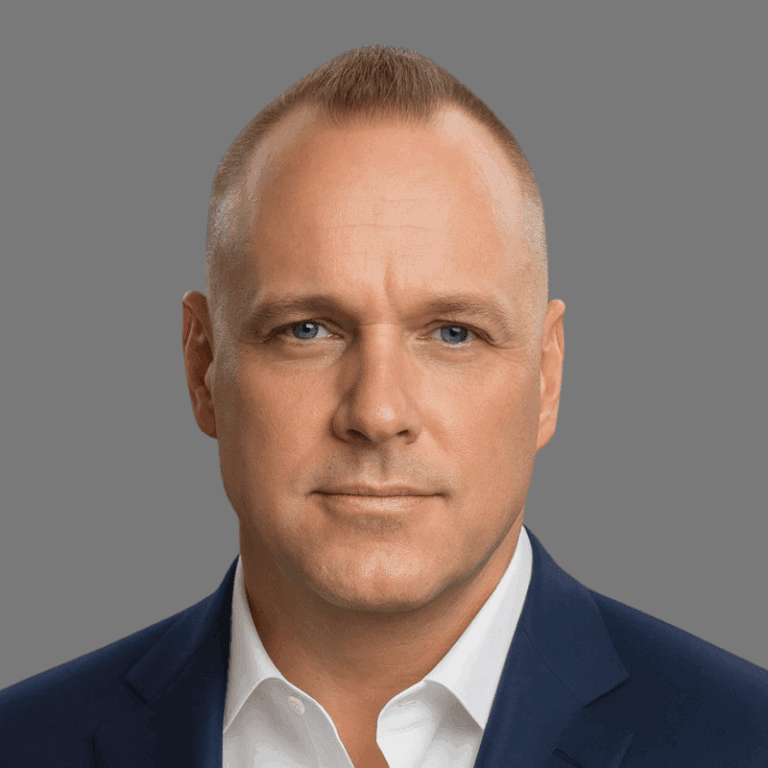
By: Ralf Ellspermann
25-Year, Multi-Awarded BPO Veteran
Published: 24 February 2026
Updated: February 24, 2026
2026 RCM Evolution: From Recovery to Prediction
- The Paradigm Shift: The era of reactive “denial management” is over. Following the IndiaAI Impact Summit (Feb 16–20, 2026), leading Indian partners now utilize Predictive Yield Modeling to flag claims with high “denial probability” before submission.
- The Metric of Success: Providers have moved beyond the “Clean Claim Rate” (CCR) to Net Realizable Value (NRV)—the actual cash-in-hand velocity of every encounter.
- Intelligence Arbitrage: Using the IndiaAI Mission’s compute stack (which crossed 58,000 GPUs this month), Indian vendors run “Large Action Models” (LAMs) that autonomously navigate payer portals at a subsidized rate of ₹65/hour, slashing overhead.
In 2026, the global healthcare sector is navigating a “10% Denial Crisis”—where nearly half of US providers face denial rates in the double digits, threatening financial solvency. This has transformed Healthcare Revenue Cycle Management (RCM) Outsourcing in India from a cost-saving measure into a high-stakes defensive strategy.
Indian RCM hubs have evolved into Predictive Yield Centers, leveraging India’s $1.2B Sovereign AI Stack to move from reactive billing to autonomous revenue generation.
The Era of Agentic RCM: “Digital Revenue Teammates”
Healthcare organizations are no longer outsourcing “tasks”; they are integrating Agentic RCM Workflows. Unlike the static automation of years past, these AI Agents act as goal-driven teammates that perceive context, plan actions, and execute across EHR and Payer systems without human prompts.
John Maczynski, CEO of Cynergy BPO and a featured speaker at the World Health Care Congress, explains:
“We’ve moved past simple RPA. In 2026, an Indian RCM hub doesn’t just ‘post a payment.’ Their Agentic AI identifies an underpayment trend in a specific CPT code, retrieves the payer’s contract terms, and automatically initiates a high-fidelity appeal. We call this Intelligence Arbitrage—where human expertise is reserved only for the most complex clinical nuances.”
Deep Dive: The $360B Efficiency Frontier
The integration of Agentic AI into Indian RCM centers is driving a projected $360 billion in annual savings globally. This is achieved through a structural transition from “Computer-Assisted” to “Fully Autonomous” workflows.
The “Resolution Architect” Framework
In 2026, the Indian workforce has been upskilled into Resolution Architects. These specialists manage Multi-Agent Systems where different AI agents serve specific functions:
- The Triage Agent: Scans incoming denials and categorizes them by “Likelihood of Overturn” using historical payer behavior data.
- The Evidence Agent: Uses NLP to mine the EHR for specific clinical evidence (lab results, physician notes) required to satisfy Medical Necessity.
- The Transactional Agent: Operates via browser-native automation to handle MFAs, CAPTCHAs, and portal uploads, mimicking human interaction without needing expensive API integrations.
Table 1: RCM Performance Benchmarks (2026)
| Metric | US In-House Average | India Agentic Hub (2026) | Performance Gain |
| First-Pass Clean Claim Rate | 78% – 82% | 98.7% – 99% (Predictive) | +20.7% Accuracy |
| Days in A/R | 45 – 55 Days | < 32 Days (Accelerated) | 35% Faster Cash |
| Denial Rate | 10% – 15% | < 4% (Predictive) | 60% Reduction |
| Net Collection Ratio | 92% | > 97% | High-Yield Capture |
Technical Deep-Dive: The “One Big Beautiful Bill” Act (OBBBA)
A critical 2026 regulatory driver is the OBBBA, which mandates consolidated, transparent billing. This has created a massive administrative burden to merge facility and professional fees into a single “Good Faith Estimate” (GFE).
Indian RCM hubs have solved this through Cross-Domain Orchestration. AI agents pull data from disparate systems—radiology, pharmacy, and surgery—in real-time to generate compliant GFEs within the 72-hour window mandated by law. This prevents “Procedural Denials” that occur when estimates are delayed or inaccurate.
Security & The DPDP Act 2026 Standard
With the Digital Personal Data Protection (DPDP) Act now fully enforceable in 2026, Indian RCM hubs have implemented the world’s most rigorous data fiduciary standards.
John Maczynski highlights the compliance shift:
“Our role at Cynergy BPO is to ensure that data isn’t just ‘moved’—it’s protected. We use ephemeral data processing, where PHI is tokenized during the billing cycle and purged immediately after adjudication. It’s no longer just HIPAA; it’s a global standard of Data Integrity.”
Table 2: 2026 Security & Compliance Matrix
| Compliance Layer | Standard Protocol | RCM Application |
| Data Governance | DPDP Act 2026 | Purpose-based retention & 72-hr breach notification. |
| Encryption | Quantum-Resistant | Protection of PHI in cross-border transfers. |
| Identity | Biometric MFA | Secure, role-based access for offshore specialists. |
| Audit | Real-time Blockchain | Immutable ledger of every claim edit/submission. |
Specialized RCM Verticals
Indian RCM hubs have moved beyond general billing into high-complexity specialties that require deep clinical literacy.
Table 3: Specialized Service Spectrum (2026)
| Vertical | Key Challenge | India Hub Solution |
| Health Systems | Complex DRG-based RCM | Automated charge capture & departmental silos resolution. |
| Digital Health | High-volume, low-margin | 99% accuracy in real-time E&B verification. |
| Specialty Groups | Niche payer rules | Specialized “Denial Squads” for Oncology/Cardiology. |
| Billing Companies | Margin compression | Serving as the “Global Delivery Center” (GDC) to scale US margins. |
The Verdict on Strategic Architecture
RCM is no longer an administrative cost—it is a strategic data function. By 2026, the convergence of India’s Sovereign AI Stack and its workforce of Resolution Architects has made Indian RCM outsourcing a prerequisite for hospital survival. Cynergy BPO provides the blueprint to move from defensive outsourcing to a Strategic Architecture that ensures financial continuity and patient trust.
FAQ: Healthcare RCM Outsourcing 2026
Q: What is “Agentic RCM”?
A: It refers to AI agents that act as “digital teammates” capable of planning and executing multi-step workflows (like complex appeals) autonomously across different software platforms.
Q: How does the IndiaAI Mission reduce my costs?
A: By subsidizing GPU compute at ₹65/hour, India enables vendors to deploy world-class AI (like BharatGen Param2) without passing high licensing fees to US providers.
Q: Is data safety guaranteed in India?
A: Yes. Under the DPDP Act 2026, Indian BPOs must follow “Privacy-by-Design,” using zero-trust models and automated data purging to ensure higher security than many in-house US teams.
Unlock cost-efficient growth with expert BPO guidance!
Partner with Cynergy BPO to connect with top outsourcing providers.
Streamline operations, cut costs, and scale your business with confidence.
Book a Free Call
Ralf Ellspermann - CSO
Author
Ralf Ellspermann is the Chief Strategy Officer (CSO) of Cynergy BPO and a globally recognized authority in business process and contact center outsourcing. With more than 25 years of experience advising enterprises and SMEs, he provides strategic guidance on vendor selection, CX optimization, and scalable outsourcing strategies across global markets. His expertise spans fintech, ecommerce and retail, healthcare, insurance, travel and hospitality, and technology (AI & SaaS) outsourcing.
A frequent speaker at leading industry conferences, Ralf is also a published contributor to The Times of India and CustomerThink, where he shares insights on outsourcing strategy, customer experience, and digital transformation.