



By: Ralf Ellspermann
25-Year, Multi-Awarded BPO Veteran
Published: 17 July 2023
Updated: February 25, 2026
30-Second Executive Briefing
- The 2026 Benchmark: In a world of generative video and spatial computing, image annotation has shifted from simple “tagging” to “Visual Reasoning.” India’s 2026 hubs focus on pixel-level accuracy for 3D cuboids, semantic segmentation, and temporal consistency.
- The Hybrid Accelerator: By leveraging Agentic Pre-labeling, Indian providers have reduced manual clicking by 70%. Human “Vision Architects” now focus exclusively on the “1% of edge cases” where AI fails, ensuring 99.9% ground-truth accuracy.
- Sovereign Efficiency: The IndiaAI Mission 2.0 has democratized high-end GPU access, allowing Indian BPOs to run local “Active Learning” loops. This reduces latency and project costs for global clients in autonomous mobility and healthcare.
- Governance First: 2026 mandates under the DPDP Act and the EU AI Act require forensic audit trails. Indian partners provide “Data Cards” documenting human-in-the-loop validation for every training pixel.
Expert Deep Dive: Beyond Boxes—The Era of “Visual Logic”
The greatest risk to Computer Vision in 2026 is “Model Collapse”—the phenomenon where AI begins to hallucinate because it was trained on synthetic data without real-world anchors. Indian outsourcing partners have positioned themselves as the “Biological Ground Truth” for the global AI ecosystem.
In 2026, annotation has moved into Multimodal Synchronization. It is no longer enough to label a stop sign; the annotator must synchronize that visual with the OCR data of the sign’s text and the depth-map from a Lidar sensor simultaneously. This requires a “Unified Labeling Environment” where multiple data types are processed in a single, relational layer.
Indian “Reasoning Pods” now utilize MM-RLHF (Multimodal Reinforcement Learning from Human Feedback). Analysts don’t just label images; they rank AI-generated descriptions of those images based on nuances like “contextual safety” and “logical flow.” This transition from labeling to judging is what allows modern Vision-Language Models (VLMs) to interact with the world safely.
The India Hybrid Vision Annotation Framework (2026)
To scale computer vision in an era of multimodal AI and spatial computing, image annotation must combine machine efficiency with human judgment. The framework below illustrates how India’s hybrid annotation pods integrate agentic pre-labeling, expert validation, sovereign GPU infrastructure, and DPDP-compliant security to deliver pixel-perfect, audit-ready datasets at global scale.
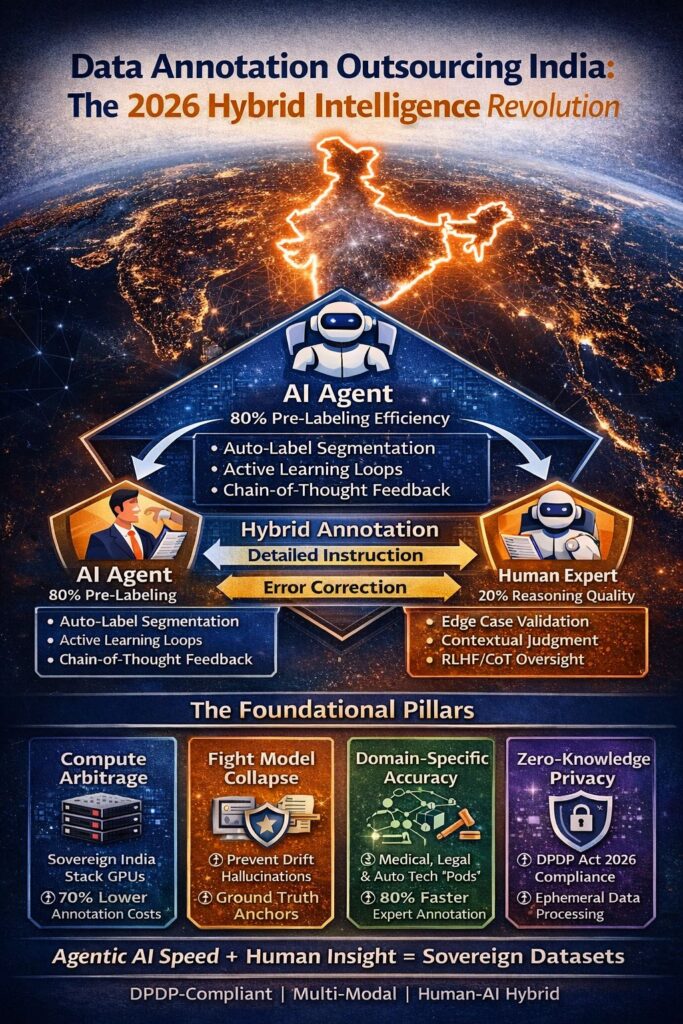
Table 1: Image Annotation Techniques (Legacy vs. 2026)
| Technique | Legacy BPO (2024) | India Hybrid Hub (2026) | Strategic Advantage |
| Bounding Boxes | Manual click-and-drag | Agent-Generated / Human-Verified | 5x Throughput Increase |
| 3D Cuboids | Basic 2D-to-3D projection | Multi-Sensor Lidar Fusion | Essential for Robotics |
| Segmentation | Rough polygon shapes | Pixel-Perfect Semantic Masks | Prevents Model Hallucinations |
| Keypoint | Landmark tagging | Skeletal & Behavioral Mapping | Trains Intuitive Humanoid AI |
| V-RLHF | N/A | Visual Preference Ranking | Aligns VLM Reasoning |
The GPU-Sovereignty Advantage
Under the India-AI Impact Summit 2026 framework, the Indian government has established a sovereign compute stack of over 38,000 GPUs. For the BPO sector, this means the “Pre-labeling” phase—where an AI agent makes the first pass on millions of images—is now done locally on Indian soil. This eliminates the need for data to travel to expensive Western clouds, slashing project timelines by 45% and ensuring that sensitive visual data stays within high-security local jurisdictions.
Table 2: 2026 Performance Benchmarks by Industry
| Industry | High-Stakes Requirement | Indian Hybrid Solution | Performance Gain |
| Autonomous | Lidar & Optical Fusion | Sensor-Sync Annotation Pods | 30% Safer Navigation |
| Precision Med | Early-Stage Pathology | Physician-Led Image Review | 50% Reduction in False Positives |
| Agri-Tech | Multispectral Crop Health | Agronomist-Supervised Labeling | 20% Higher Yield Prediction |
| Smart Retail | Intent-Based Navigation | Behavioral Keypoint Tracking | 40% Better CX Conversion |
Reliability Metrics: Quantifying the “Human Stamp”
In 2026, “quality” is no longer a subjective claim; it is a mathematical requirement. Indian hubs now use Inter-Annotator Agreement (IAA) metrics as a standard deliverable.
Table 3: 2026 Quality Assurance Framework
| Metric | Methodology | Application | Purpose |
| Cohen’s Kappa | Measuring agreement between 2 experts | High-stakes Medical/Legal | Eliminating subjective bias |
| Fleiss’ Kappa | Measuring agreement across large teams | Mass-scale Retail/E-comm | Ensuring categorical consistency |
| Consensus Protocol | “Double-Blind” + Expert Tie-break | Edge-case Robotics/AV | Establishing the “Gold Standard” |
| ISO/IEC 5259 | Data Quality for AI Standards | Global Enterprise Compliance | Statutory Data Provenance |
Security: “Zero-Knowledge” and DPDP Integrity
With the DPDP Act 2026 in full effect, Indian providers have moved to “Privacy-Preserving Workflows”:
- Ephemeral Memory: Data is streamed via encrypted “View-Only” portals; no local storage exists.
- Auto-Anonymization: AI agents blur faces and license plates before the human annotator sees the frame.
- Audit Traceability: Using Blockchain-backed logs, every single click or label is recorded, providing a legal defense for “Explainable AI” (XAI) mandates.
FAQ: Image Annotation in 2026
What is the impact of the IndiaAI Mission on my project costs?
By subsidizing the GPU compute required for pre-labeling, the IndiaAI Mission allows BPOs to lower their operational overhead. This typically results in a 25% to 40% cost reduction for the client compared to 2024 rates.
Can your teams provide RLHF for vision-language models?
Yes. Our Indian teams provide V-RLHF, where experts judge the accuracy of an AI’s verbal description of a visual scene, ensuring the model’s “internal logic” matches human perception.
How does India handle 3D/Lidar data for autonomous systems?
Indian hubs have pioneered “Sensor Fusion Annotation,” syncing Lidar point clouds with 280° camera feeds in a unified 3D environment to ensure “Depth-Visual Consistency.”
What is the “Human-in-the-Loop” requirement for the EU AI Act?
Article 14 of the EU AI Act (effective August 2026) requires high-risk systems to have meaningful human oversight. Indian partners provide the “Traceability Logs” that prove a human verified the training data.
Is manual annotation still relevant in 2026?
Yes, but its role has changed. Manual work is now focused on “Exception Management”—handling the complex, rare cases that automated systems haven’t seen yet.
How is “Data Provenance” handled in Indian BPOs?
Every dataset is delivered with a “Data Card” that specifies who annotated the data, their domain qualifications (e.g., “3+ years in Oncology”), and the mathematical accuracy scores (Kappa) of the set.
“In 2026, the winner isn’t the company with the most images; it’s the company with the clearest vision. At Cynergy BPO, we bridge the gap between raw pixels and intelligent action by deploying India’s most advanced human-AI hybrid teams,” says John Maczynski, CEO of Cynergy BPO.
Unlock cost-efficient growth with expert BPO guidance!
Partner with Cynergy BPO to connect with top outsourcing providers.
Streamline operations, cut costs, and scale your business with confidence.
Book a Free Call
Ralf Ellspermann - CSO
Author
Ralf Ellspermann is the Chief Strategy Officer (CSO) of Cynergy BPO and a globally recognized authority in business process and contact center outsourcing. With more than 25 years of experience advising enterprises and SMEs, he provides strategic guidance on vendor selection, CX optimization, and scalable outsourcing strategies across global markets. His expertise spans fintech, ecommerce and retail, healthcare, insurance, travel and hospitality, and technology (AI & SaaS) outsourcing.
A frequent speaker at leading industry conferences, Ralf is also a published contributor to The Times of India and CustomerThink, where he shares insights on outsourcing strategy, customer experience, and digital transformation.