



By: Ralf Ellspermann
25-Year, Multi-Awarded BPO Veteran
Published: 13 March 2026
Updated: March 13, 2026
TL;DR: The Key Takeaway
Keypoint annotation outsourcing in India has transcended simple data labeling, evolving into a specialized discipline focused on delivering the biomechanical and kinematic accuracy required to power sophisticated, human-centric AI systems. The nation is now the premier destination for achieving model precision through expert-led human-in-the-loop services.
To achieve high-fidelity human-centric AI, developers require training data that reflects authentic skeletal mechanics. India has emerged as the global epicenter for this specialized work, transitioning from basic image labeling to complex 4D kinematic mapping. By leveraging a massive STEM-educated workforce, Indian providers deliver the anatomical precision necessary for advanced applications in autonomous systems, sports science, and healthcare.
Executive Briefing
- Precision Bottleneck: Modern AR/VR and motion-heavy AI require data that adheres to strict laws of physics and human anatomy.
- Dimensional Evolution: Industry standards have shifted from static 2D coordinates to 4D sequences that track velocity and joint rotation over time.
- Technical Pedigree: Access to graduates from elite institutions like the IITs ensures annotators possess the mathematical grounding for complex spatial tasks.
- Strategic Value: The primary incentive for Indian partnerships has migrated from simple cost reduction to specialized “Intelligence Arbitrage.”
- Reliability & Governance: Mature operational frameworks in the Indian IT-BPM sector provide the rigorous quality control essential for mission-critical AI safety.
Beyond Points on a Screen: The Rise of Kinematic Data
Early iterations of computer vision relied on rudimentary landmarking—identifying the placement of a nose or a wrist within a static frame. While sufficient for basic photo tagging, these flat datasets fail to capture the nuances of a living, breathing subject. Modern AI must comprehend not just the presence of a human, but the intent and physical constraints of their movement.
The current technological landscape demands a transition into 4D kinematics. Whether it is a surgical robot predicting a doctor’s hand trajectory or a virtual coach analyzing a runner’s stride, the AI requires a deep understanding of skeletal structures and temporal consistency. This evolution transforms annotation from a clerical task into a sophisticated engineering discipline. Technicians now define joint angles, validate range-of-motion limits, and ensure that every labeled frame respects the biological realities of the human body.
The Indian Talent Catalyst: Engineering Biomechanical Truth
The surge in keypoint annotation outsourcing in India is fueled by the country’s unique educational architecture. With a constant influx of engineers and scientists from the Indian Institutes of Technology (IIT) and the Indian Institute of Science (IISc), the workforce possesses an inherent grasp of the physics and calculus required for spatial modeling.
These experts do more than follow a manual; they apply a “human-in-the-loop” layer of cognitive problem-solving. They can identify when a predicted pose is physically impossible and use scripting languages like Python to build automated validation tools that check for anatomical coherence across thousands of frames. This synergy between data labeling and software engineering allows Indian teams to function as a seamless extension of a client’s R&D department, moving past the vendor-client dynamic toward a true intellectual alliance.
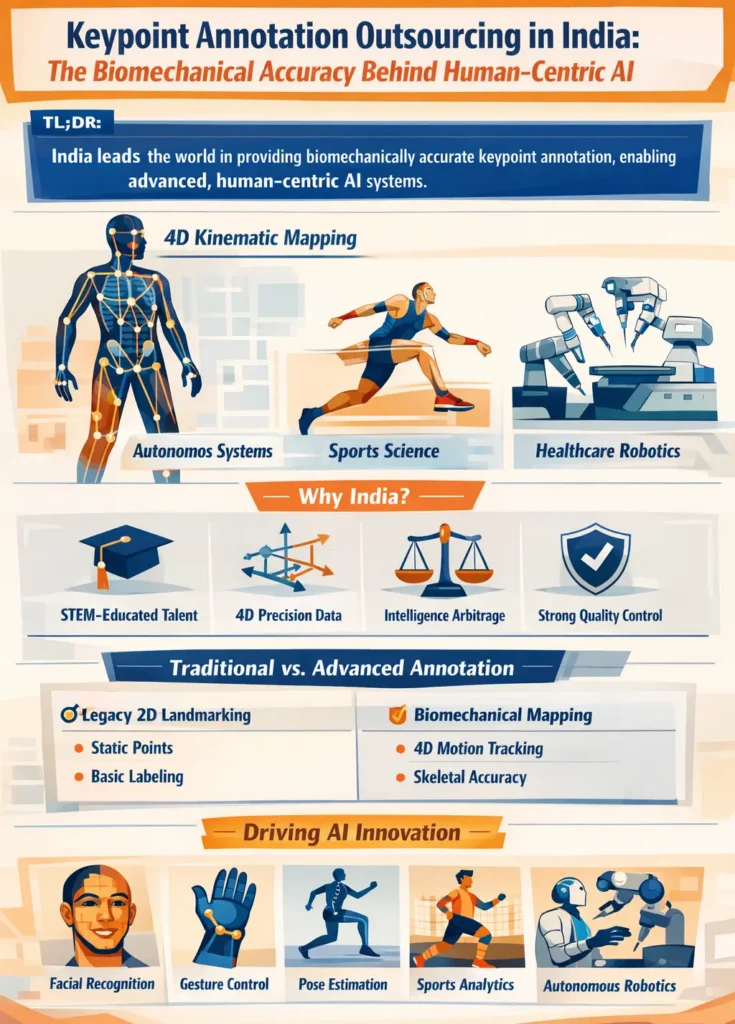
Table 1: Comparing Traditional vs. Expert-Led Annotation
The following breakdown illustrates how the Indian IT-BPM sector has elevated the standard of training data.
| Feature | Legacy 2D Landmarking | Advanced Biomechanical Mapping (India) |
| Primary Objective | Static point identification | Dynamic motion and kinematic validation |
| Required Expertise | Basic visual recognition | Anatomy, physics, and Python scripting |
| Data Depth | 2D (x, y coordinates) | 3D/4D (Spatial depth + temporal flow) |
| Success Metric | Per-frame point accuracy | Skeletal consistency across sequences |
| Strategic Use | Simple image classification | Complex, interactive human-centric AI |
Intelligence Arbitrage: Maximizing Model Performance
In the high-stakes world of AI, “Intelligence Arbitrage” describes the value gained by utilizing a workforce capable of high-order reasoning. This isn’t about saving pennies; it’s about the precision that prevents a self-driving car from misinterpreting a pedestrian’s gait or ensures a fitness app provides safe ergonomic feedback.
When data is annotated by specialists who understand inertia and momentum, the resulting AI models are inherently more robust. This leads to a measurable impact on the bottom line: higher model accuracy, fewer edge-case failures, and a faster path to commercialization. Leading tech firms view the South Asian talent corridor as a vital partner because it bridges the gap between raw video footage and the refined, “physically-aware” data required for reliable machine learning.
Table 2: Application Complexity and Strategic Impact
Different AI domains require varying levels of annotation sophistication, a spectrum where Indian providers offer tailored expertise.
| Application | Complexity Level | Necessary Knowledge | Impact on AI Reliability |
| Facial Verification | Low to Moderate | Basic facial landmarks | Essential for security and mood analysis |
| Gesture Control | Moderate | High-detail finger/joint tracking | Key for AR/VR and accessibility tools |
| Pose Estimation | High | Deep skeletal and muscle mapping | Drives virtual fitness and gaming |
| Sports Analytics | Very High | Biomechanical & kinematic sequencing | Optimizes performance and prevents injury |
| Autonomous Robotics | Extreme | Physics-based 3D environment interaction | Ensures safe human-robot proximity |
Process Integrity and the Foundation of Trust
As AI becomes more integrated into infrastructure and healthcare, the provenance of its training data is a matter of safety. Flawed datasets result in biased or dangerous AI behaviors. This is where the long-standing governance standards of the Indian IT-BPM industry provide a safety net.
Decades of experience in highly regulated sectors like global finance have cultivated a culture of meticulous quality assurance. In the realm of keypoint annotation, this translates to multi-stage verification cycles where each label is checked against anatomical constraints. If a limb appears to bend at an impossible angle, the system flags it for human review. This rigorous commitment to process ensures that the data isn’t just a set of coordinates, but a faithful representation of physical reality that developers can trust.
Expert Perspectives
How do Indian specialists move beyond simple labeling?
The workforce integrates a background in STEM with a mastery of data science tools. This allows them to interpret complex human movements—such as the subtle weight shifts in a gait cycle—and translate those observations into precise digital markers that respect the laws of physics.
What role does the “Follow-the-Sun” model play in AI training?
The time difference between North America and India creates a perpetual development loop. While US teams sleep, Indian specialists process vast amounts of high-complexity data, ensuring that fresh, high-quality datasets are ready for model training by the following morning, effectively doubling the speed of iteration.
Can automated tools replace human annotators in this field?
Automation excels at “low-hanging fruit,” but it fails when faced with occlusions, unusual lighting, or complex poses. The current gold standard is a collaborative model: AI handles the repetitive initial passes, while highly skilled Indian annotators perform the nuanced validation and edge-case correction that only a human with physical intuition can provide.
How is sensitive proprietary data protected during the process?
Top-tier Indian providers adhere to global security standards, including ISO 27001 and GDPR. They utilize secure, air-gapped environments and strict non-disclosure frameworks, allowing AI innovators to scale their data operations without compromising intellectual property or user privacy.
Unlock cost-efficient growth with expert BPO guidance!
Partner with Cynergy BPO to connect with top outsourcing providers.
Streamline operations, cut costs, and scale your business with confidence.
Book a Free Call
Ralf Ellspermann - CSO
Author
Ralf Ellspermann is the Chief Strategy Officer (CSO) of Cynergy BPO and a globally recognized authority in business process and contact center outsourcing. With more than 25 years of experience advising enterprises and SMEs, he provides strategic guidance on vendor selection, CX optimization, and scalable outsourcing strategies across global markets. His expertise spans fintech, ecommerce and retail, healthcare, insurance, travel and hospitality, and technology (AI & SaaS) outsourcing.
A frequent speaker at leading industry conferences, Ralf is also a published contributor to The Times of India and CustomerThink, where he shares insights on outsourcing strategy, customer experience, and digital transformation.