



By: Ralf Ellspermann
25-Year, Multi-Awarded BPO Veteran
Published: 25 March 2026
Updated: March 18, 2026
In the high-stakes world of 2026 AI development, the “bounding box” is no longer enough. To power autonomous vehicles, robotic surgery, and precision agriculture, machine learning models require an exact understanding of physical contours. Kenya has emerged as the global leader in Polygon Annotation, transforming the “Silicon Savannah” into a critical hub for high-fidelity computer vision data.
The 2026 Precision Standard
Polygon annotation in 2026 is the process of mapping multi-point vertices around irregular objects to provide pixel-perfect “ground truth” for AI. Kenya’s specialized workforce excels in this “art of precision,” delivering the complex geometric data required for Semantic Segmentation and Instance Segmentation—technologies that allow AI to distinguish between overlapping objects in dense, real-world environments.
30-Second Executive Briefing
- Geometric Fidelity: Kenyan specialists utilize multi-point vertex mapping to outline irregular shapes (foliage, tumors, or debris) that rectangular boxes cannot capture.
- Global AI Supply Chain: Nairobi is now a Tier-1 destination for Fortune 500 AI-ops, offering a rare blend of technical STEM expertise and high English proficiency.
- Safety-Critical Data: Precision labeling from Kenyan firms is foundational for YMYL (Your Money or Your Life) applications, including medical diagnostics and autonomous transit.
- Vetted Governance: Cynergy BPO serves as the strategic architect, auditing Kenyan providers for ISO/IEC 5259 compliance and ethical data provenance.
- Future-Proofing: By 2026, Kenyan teams are pioneering “Synthetic-Human Hybrid” workflows, where humans validate and refine AI-generated polygon drafts.
The Intricacies of Polygon Annotation: Fueling Advanced AI
Simple object detection is a solved problem; the new frontier is Environmental Understanding. For an AI to navigate a crowded warehouse or identify a pest infestation on a single leaf, it must understand where one object ends and another begins with sub-pixel accuracy.
Polygon Annotation Outsourcing to Kenya provides the granular detail necessary for these complex geometries. Unlike bounding boxes, which include “noise” (background pixels), polygons fit the target tightly. This eliminates false positives and ensures that when an autonomous drone or surgical robot makes a split-second decision, it is acting on the most accurate spatial data possible.
“In 2026, a ‘precise’ label is an ‘expert’ label. Our Kenyan partners don’t just trace lines; they interpret context. Whether it’s distinguishing a benign shadow from a road hazard or identifying the specific margins of a biological asset, the human-in-the-loop oversight in Kenya is what prevents model collapse and ensures real-world safety.” — John Maczynski, CEO of Cynergy BPO.
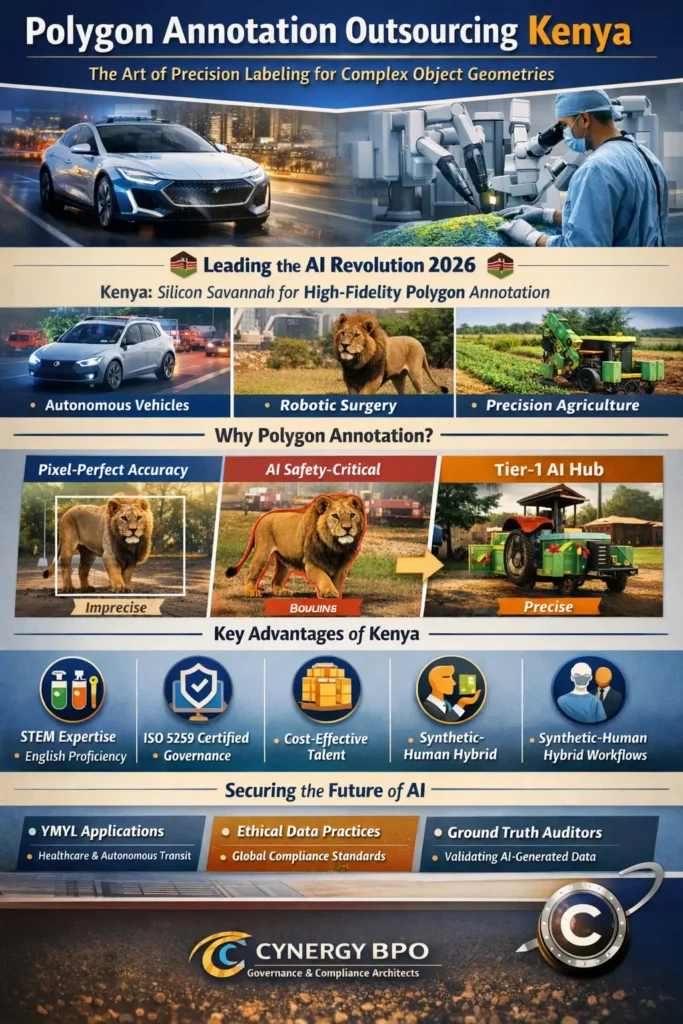
Table 1: Annotation Hierarchy for Computer Vision (2026)
| Technique | Dimensionality | Data Fidelity | Best Use Case |
| Bounding Box | 2D Rectangle | Basic | General object detection (cars, people). |
| Polygon | 2D Multi-point | Ultra-High | Irregular shapes, medical scans, agriculture. |
| Polyline | 2D Line | Linear | Lane detection, road markings, pipelines. |
| Cuboid | 3D Box | Spatial | 3D depth perception for LiDAR/Autonomous bots. |
| Keypoint | Point Mapping | Structural | Human pose estimation, facial landmarking. |
Enhancing AI Model Performance Through Kenyan Precision
The accuracy of a polygon outline directly correlates to the Mean Average Precision (mAP) of the resulting AI model. In industries like healthcare, where Kenyan annotators might label thousands of MRI slices to train a tumor-detection algorithm, a margin of error of just a few pixels can be the difference between a life-saving diagnosis and a missed opportunity.
Kenyan firms have institutionalized rigorous Quality Assurance (QA) protocols, including:
- Inter-Annotator Agreement (IAA): Using Cohen’s Kappa metrics to ensure multiple experts agree on the same boundary.
- Double-Blind Verification: Having two teams annotate the same dataset independently, with a senior expert resolving discrepancies.
- Active Feedback Loops: Real-time synchronization between the US/EU-based ML engineers and the Nairobi-based labeling teams to prevent “instruction drift.”
Table 2: Enterprise Advantages of Outsourcing to Kenya
| Advantage | 2026 Market Impact | Why Kenya? |
| Pixel-Perfect Accuracy | Reduces AI “hallucinations” and false positives. | Meticulous attention to detail and rigorous STEM training. |
| Technical Scalability | Handles datasets of 1M+ images in weeks, not months. | Large, tech-savvy youth population in Nairobi/Mombasa. |
| Compliance & Ethics | Meets EU AI Act and GDPR/DPA transparency rules. | Strict adherence to international data sovereignty laws. |
| Cost-to-Value Ratio | Optimizes R&D budgets for higher ROI. | Competitive operational costs for Tier-1 specialized talent. |
The Future Landscape: Kenya’s Role in the Global AI Ecosystem
By 2026, the demand for high-quality data is no longer about quantity—it is about Information Gain. As AI models begin to consume “Synthetic Data,” the role of the Kenyan annotator has shifted to that of a “Ground Truth Auditor.” They provide the “natural person” oversight required by the EU AI Act, ensuring that AI-generated data doesn’t lead to “model collapse” by reinforcing its own errors.
Kenya’s proactive digital infrastructure and focus on niche, high-value data preparation have made it an indispensable partner for any enterprise serious about building world-class, ethical artificial intelligence.
Expert FAQ
Why is polygon annotation more expensive than bounding boxes?
Polygon annotation requires placing dozens of individual vertices around an object’s contour, whereas a bounding box requires only two clicks. The increased time and manual dexterity required for polygons are why firms outsource to Kenyan hubs to maintain high quality at a manageable price point.
How does Kenya mitigate bias in AI data labeling?
Kenyan AI-ops firms employ diverse teams of annotators and follow strict bias-mitigation protocols. This diverse human-in-the-loop oversight is essential for ensuring that computer vision models (especially in facial recognition or retail) perform equitably across different demographics.
What is the role of Cynergy BPO in this process?
Cynergy BPO acts as a Governance Architect. They vet the top 1% of Kenyan providers to ensure they use the latest annotation software (supporting AI-assisted labeling), follow ISO standards, and maintain the secure, air-gapped facilities required for sensitive IP protection.
Unlock cost-efficient growth with expert BPO guidance!
Partner with Cynergy BPO to connect with top outsourcing providers.
Streamline operations, cut costs, and scale your business with confidence.
Book a Free Call
Ralf Ellspermann - CSO
Author
Ralf Ellspermann is the Chief Strategy Officer (CSO) of Cynergy BPO and a globally recognized authority in business process and contact center outsourcing. With more than 25 years of experience advising enterprises and SMEs, he provides strategic guidance on vendor selection, CX optimization, and scalable outsourcing strategies across global markets. His expertise spans fintech, ecommerce and retail, healthcare, insurance, travel and hospitality, and technology (AI & SaaS) outsourcing.
A frequent speaker at leading industry conferences, Ralf is also a published contributor to The Times of India and CustomerThink, where he shares insights on outsourcing strategy, customer experience, and digital transformation.