


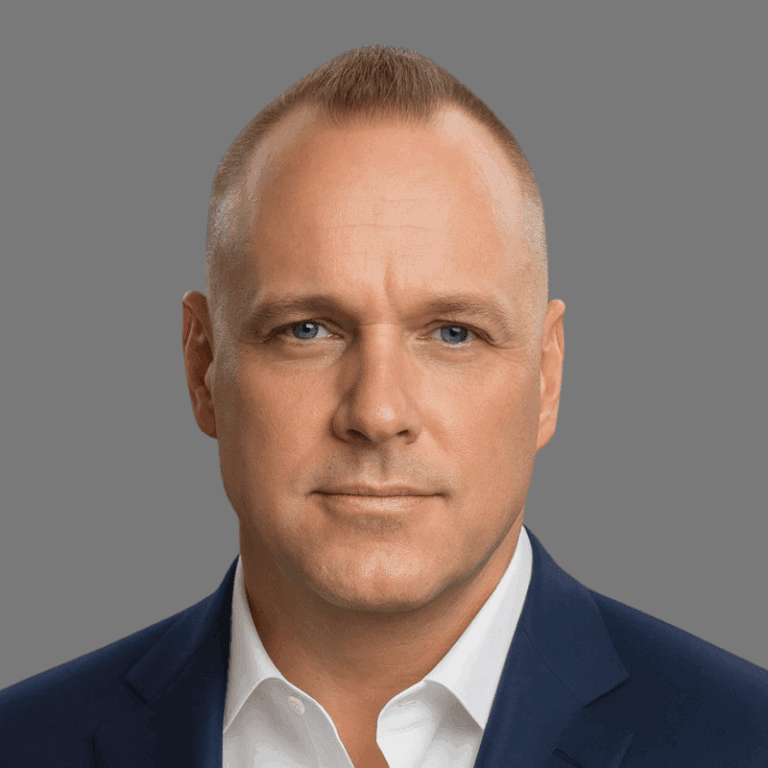
By: Ralf Ellspermann
25-Year, Multi-Awarded BPO Veteran
Published: 24 February 2026
Updated: February 24, 2026
30-Second Executive Briefing
- The 2026 Shift: Telehealth support has evolved from simple scheduling to Continuous Clinical Engagement. Indian hubs now utilize Agentic Care Coordinators to manage the entire virtual visit lifecycle autonomously.
- The Tech Edge: Integration of Multimodal LLMs allows Indian support agents to provide real-time technical troubleshooting for remote patient monitoring (RPM) devices, ensuring 99.9% uptime for critical home-care data.
- Performance Impact: Providers report a 50% reduction in “No-Show” rates and a 30% increase in patient satisfaction (HCAHPS) scores through proactive, AI-driven digital navigation.
- Compliance: Fully aligned with HIPAA 2026 and India’s DPDP Act, hubs utilize biometric-locked VDI environments where patient PHI is never stored, only streamed.
Deep Dive: From Technical Support to Care Orchestration
In 2026, the success of a virtual care program is no longer defined by the video platform, but by the Support Ecosystem surrounding it. As U.S. health systems struggle with “Digital Fatigue” and fragmented RPM data, India has emerged as the global command center for Telehealth Operations.
The breakthrough of the current era is Multi-Agent Orchestration. Indian delivery centers no longer rely on a single agent to manage a call. Instead, a primary human navigator oversees a “swarm” of specialized AI agents. While the human addresses the patient’s anxiety regarding a new diagnosis, a Connectivity Agent optimizes the patient’s home bandwidth and a Contract Agent verifies that the specific telehealth modality (synchronous vs. asynchronous) is covered under the patient’s updated 2026 health plan.
Furthermore, the IndiaAI Mission has enabled these hubs to process massive datasets of “Patient Effort Scores.” By analyzing micro-hesitations in a patient’s voice or navigation patterns on a portal, Indian support centers can predict tech-failure before a scheduled visit occurs. This allows for proactive outreach 30 minutes prior to an appointment, ensuring the physician never walks into an empty virtual waiting room.
The Rise of the “Digital Scribe” Hub
Beyond technical support, Indian centers have integrated Ambient Intelligence into the telehealth workflow. As the patient and U.S. physician speak, Indian-based “Shadow Agents” utilize HIPAA-compliant ambient listening tools to draft clinical notes and suggest ICD-11 codes in real-time. This reduces physician “pajama time” by 40%, allowing doctors to focus entirely on the patient rather than the keyboard.
This hybrid model—combining India’s vast medical talent pool with cutting-edge compute—has transformed telehealth from a “backup option” into a highly efficient, primary care engine.
Bridging the Rural-Digital Divide
One of the most significant impacts of Indian telehealth outsourcing in 2026 is its role in Equity-Driven Virtual Care. For U.S. health systems serving rural or underserved populations, the barrier to telehealth isn’t just broadband; it is digital literacy. Indian support hubs have pioneered Guided Digital Navigation, where agents use co-browsing technology to literally “walk” elderly or non-tech-savvy patients through their first login. This intensive, high-empathy support is made economically viable through India’s unique cost structure, allowing U.S. providers to extend virtual services to demographics previously considered “unreachable.”
Furthermore, these hubs now function as Language Localization Centers. In real-time, Indian agents can provide medical interpretation in over 150 languages using AI-augmented translation tools that preserve the clinical nuance of the physician’s instructions. This ensures that a telehealth visit in 2026 is as effective for a non-English speaking patient as it is for a native speaker, significantly reducing health disparities.
Intelligence-Led Resource Allocation
Finally, Indian hubs are utilizing Predictive Capacity Modeling to solve the provider shortage. By analyzing real-time patient demand spikes across different time zones, Indian command centers can shift support resources dynamically. If a winter storm in the Northeast U.S. causes a 300% surge in telehealth respiratory visits, the Indian hub automatically scales its “Triage Agent” fleet to handle the intake, ensuring that patient wait times never exceed the critical 60-second threshold.
“In 2026, telehealth is a logistical challenge disguised as a clinical one. India provides the technical and agentic backbone to solve that logistics puzzle in real-time,” says John Maczynski, CEO of Cynergy BPO.
Table 1: Telehealth Support Evolution (2024 vs. 2026)
| Service Component | Legacy Support (2024) | Agentic India Hub (2026) | Strategic Impact |
| Patient Onboarding | Manual Instruction | AI-Guided Walkthrough | 70% reduction in tech-failure |
| No-Show Management | Reactive Calls | Predictive Rescheduling | 50% increase in provider yield |
| RPM Monitoring | Passive Data Collection | Active Triage Agents | Prevents ER visits via early alert |
| Payer Reimbursement | High Denial (Tele-codes) | 99% Clean-Claim (AI) | Accelerated Telehealth ROI |
Table 2: 2026 Telehealth Performance Benchmarks
| Metric | US In-House | India Agentic Hub (2026) | Performance Gain |
| Avg. Wait Time (Tech) | 8 Minutes | < 45 Seconds | 90% Improved Access |
| Patient Retention Rate | 62% | 91% | Higher Lifetime Value |
| Cost per Encounter | $14.00 | **$3.50** | 75% Operating Efficiency |
| Compliance Rating | Standard HIPAA | Zero-Possession (DPDP) | Maximum Security Resilience |
The “Zero-Possession” Security Frontier
The DPDP Act 2026 has turned India into the world’s most secure data processing zone. Telehealth support agents work in Ephemeral Data Environments. Through Pixel-Streaming, the patient’s health record remains in the U.S. cloud; the Indian agent merely sees a “reflection” to facilitate the visit. Once the session ends, the “pixel stream” evaporates, leaving no trace of PHI on offshore hardware.
Verdict: Scaling the Virtual Frontier
“Telehealth in 2026 is about ‘Resolution Velocity,'” concludes Maczynski. “If a patient can’t connect in 30 seconds, you’ve lost them. India’s Agentic hubs ensure that connection is flawless, compliant, and cost-effective.”
FAQ: Telehealth Support 2026
Q: How does India handle Remote Patient Monitoring (RPM) technical issues?
A: Using Multimodal AI, Indian support hubs can visually guide patients through device setup and troubleshooting via their smartphone camera, reducing device-related “data gaps” by 80%.
Q: Is PHI data stored in India during a telehealth support session?
A: No. Under the “Zero-Possession” model and DPDP Act 2026, data is streamed via encrypted pixels. No patient information is ever written to a local disk in India.
Q: Can Indian agents help with telehealth reimbursement?A: Yes. Agentic RCM tools automatically map telehealth-specific modifiers and place-of-service codes to ensure 99% clean-claim rates for virtual encounters.
Unlock cost-efficient growth with expert BPO guidance!
Partner with Cynergy BPO to connect with top outsourcing providers.
Streamline operations, cut costs, and scale your business with confidence.
Book a Free Call
Ralf Ellspermann - CSO
Author
Ralf Ellspermann is the Chief Strategy Officer (CSO) of Cynergy BPO and a globally recognized authority in business process and contact center outsourcing. With more than 25 years of experience advising enterprises and SMEs, he provides strategic guidance on vendor selection, CX optimization, and scalable outsourcing strategies across global markets. His expertise spans fintech, ecommerce and retail, healthcare, insurance, travel and hospitality, and technology (AI & SaaS) outsourcing.
A frequent speaker at leading industry conferences, Ralf is also a published contributor to The Times of India and CustomerThink, where he shares insights on outsourcing strategy, customer experience, and digital transformation.