



By: Ralf Ellspermann
25-Year, Multi-Awarded BPO Veteran
Published: 15 April 2026
Updated: March 30, 2026
Static image recognition has been superseded by Temporal Intelligence—the ability for models to understand movement, intent, and cause-and-effect across time. Video annotation outsourcing in Costa Rica has emerged as the premier nearshore solution for this transition, offering high-precision labeling for autonomous systems, security, and surgical robotics. At an average hourly rate of $16–$22, Costa Rica provides the cognitive depth required to manage frame-by-frame persistence and complex event tagging at a fraction of North American costs.
30-Second Executive Briefing
- Temporal Expertise: Costa Rican teams specialize in object tracking and interpolation, maintaining persistent IDs across occlusions in 30fps and 60fps video streams.
- Cost Advantage: At $16–$22/hour, enterprises access university-educated talent that reduces the “Total Cost of Quality” by eliminating the 25% rework rate common in cheaper offshore hubs.
- Zero Latency Collaboration: Real-time feedback loops via CST/EST time-zone parity allow for “Active Learning” cycles where annotators and engineers sync daily.
- High-Security Standards: Full compliance with Law No. 8968 and ISO 27001 makes Costa Rica a safe harbor for sensitive surveillance and medical video data.
- Multimodal Integration: Local labs are equipped for Sensor Fusion, aligning RGB video with LiDAR and Radar data for “Level 4” autonomous vehicle training.
The 2026 Competitive Landscape
The strategic decision to outsource video annotation often hinges on balancing technical accuracy with operational overhead. The following table illustrates why Costa Rica’s $16–$22 price point is considered the “Goldilocks Zone” for 2026 AI development.
Table 1: Global Video Annotation Benchmarks (2026)
| Region | Avg. Hourly Rate | Time Zone Sync (US) | Accuracy (1st Pass) | Best Use Case |
| Costa Rica | $16 – $22 | Full (CST/EST) | 96% – 98% | AV, Medical, RLHF |
| South Asia | $4 – $10 | 12-Hour Lag | 75% – 82% | Basic 2D Tagging |
| Eastern Europe | $19 – $28 | 6-8 Hour Lag | 92% – 95% | Computer Vision |
| North America | $55 – $95+ | Perfect | 99% | GovTech/Highly Sensitive |
Beyond Bounding Boxes: The Era of Temporal Reasoning
Video annotation in 2026 is no longer about drawing boxes on 10,000 isolated frames; it is about Temporal Reasoning. This involves understanding that a pedestrian in Frame 1 is the same entity in Frame 900, even if they disappear behind a parked bus for 50 frames.
Costa Rica’s workforce, heavily skewed toward STEM and technical backgrounds, excels at this “Persistence Mapping.” The country’s infrastructure supports the high-bandwidth requirements for streaming 4K training data, while the cultural proximity to Western markets ensures that human behaviors—such as a driver’s “hand-off” gesture—are labeled with native-level accuracy.
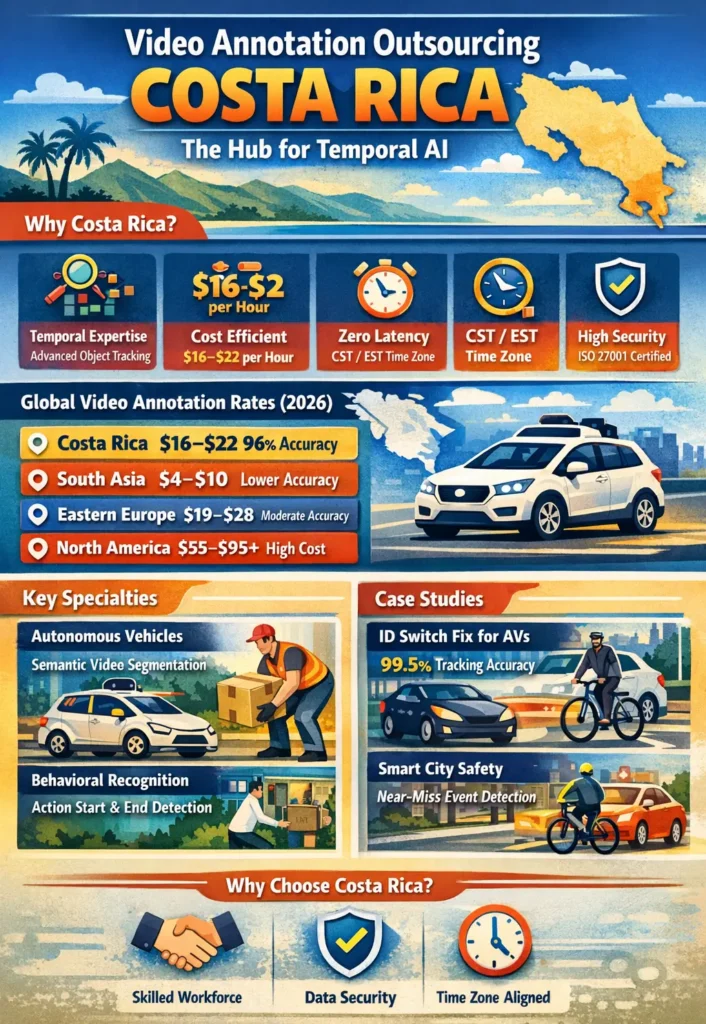
Table 2: ROI Mapping by Video Annotation Task
| Task Type | Complexity | Value of Costa Rica Talent | ROI Impact |
| Temporal Action Localization | Extreme | Identifies exact milliseconds of “Action Start/End.” | High: Essential for Smart City Safety. |
| Object Tracking (ID Persistence) | High | Eliminates “ID Swaps” during object occlusion. | Critical: Reduces autonomous vehicle stalls. |
| Semantic Video Segmentation | High | Pixel-perfect classification across frames. | Moderate: Faster model convergence. |
| Keypoint Estimation | Medium | Precise joint-tracking for sports/medical AI. | High: Improves diagnostic accuracy. |
Specializations: Where Costa Rica Leads the Market
Autonomous Vehicle (AV) Perception
Costa Rica has become a specialized hub for Semantic Video Segmentation. At the $16–$22 price point, annotators provide the grueling detail required for ADAS (Advanced Driver Assistance Systems) to function in complex weather conditions.
Behavioral and Action Recognition
For retail analytics and workplace safety, understanding “Action Start” and “Action End” is vital. Costa Rican teams are trained in identifying the exact millisecond a specific behavior occurs, such as a factory worker lifting a heavy object with improper form.
Authentic Case Studies: Nearshore Video Excellence
Case Study 1: Resolving the “Ghosting” ID Crisis
A Boston-based autonomous delivery startup was plagued by “ID Switching,” where their AI would lose track of obstacles during turns.
- The Conflict: Their offshore provider in Southeast Asia had a 15% ID-switch rate, causing the robots to stall in traffic.
- The Costa Rica Solution: A team of 25 in Alajuela was onboarded at $20/hour.
- The Result: ID-switching dropped to less than 0.5%. The proximity in time zone allowed for twice-daily QA checks, shortening the training cycle by four months.
Case Study 2: Smart City Surveillance and Safety
A European firm deploying AI-monitored smart crossings in North America needed to identify “Near-Miss” events between cars and cyclists.
- The Conflict: Automated tools failed to capture the subtle “pre-event” cues of an impending collision.
- The Solution: A specialized “Behavior Lab” in San José was tasked with labeling Micro-Actions at $22/hour.
- The Result: The model’s predictive accuracy for accidents improved by 60%.
Frequently Asked Questions (FAQ)
Why is video annotation significantly more expensive than image annotation?
Complexity. To maintain “Temporal Consistency,” an annotator must track the same object across thousands of frames, ensuring the label doesn’t “drift” or change ID. This requires significantly more cognitive focus and technical skill.
Can Costa Rican teams handle “Sensor Fusion” (Video + LiDAR)?
Yes. Many providers in Costa Rica’s Free Trade Zones are equipped for “Multi-Modal Synchronization,” where they align RGB video frames with 3D LiDAR point clouds in real-time.
How does Costa Rica’s political stability affect long-term annotation contracts? A: Costa Rica is frequently cited as the most stable democracy in Latin America. For AI firms, this translates to zero “geopolitical downtime,” consistent infrastructure performance, and a reliable legal framework for intellectual property—unlike some higher-risk offshore regions.
Is there a minimum project size for starting a nearshore video team? A: While many large vendors prefer teams of 10+, the local ecosystem is flexible. Many specialized boutiques in San José offer “Pilot Pods” (3–5 specialists) at the $18–$22/hour range, allowing startups to scale as their dataset requirements grow.
Share This
Unlock cost-efficient growth with expert BPO guidance!
Partner with Cynergy BPO to connect with top outsourcing providers.
Streamline operations, cut costs, and scale your business with confidence.
Book a Free Call
Ralf Ellspermann - CSO
Author
Ralf Ellspermann is the Chief Strategy Officer (CSO) of Cynergy BPO and a globally recognized authority in business process and contact center outsourcing. With more than 25 years of experience advising enterprises and SMEs, he provides strategic guidance on vendor selection, CX optimization, and scalable outsourcing strategies across global markets. His expertise spans fintech, ecommerce and retail, healthcare, insurance, travel and hospitality, and technology (AI & SaaS) outsourcing.
A frequent speaker at leading industry conferences, Ralf is also a published contributor to The Times of India and CustomerThink, where he shares insights on outsourcing strategy, customer experience, and digital transformation.