


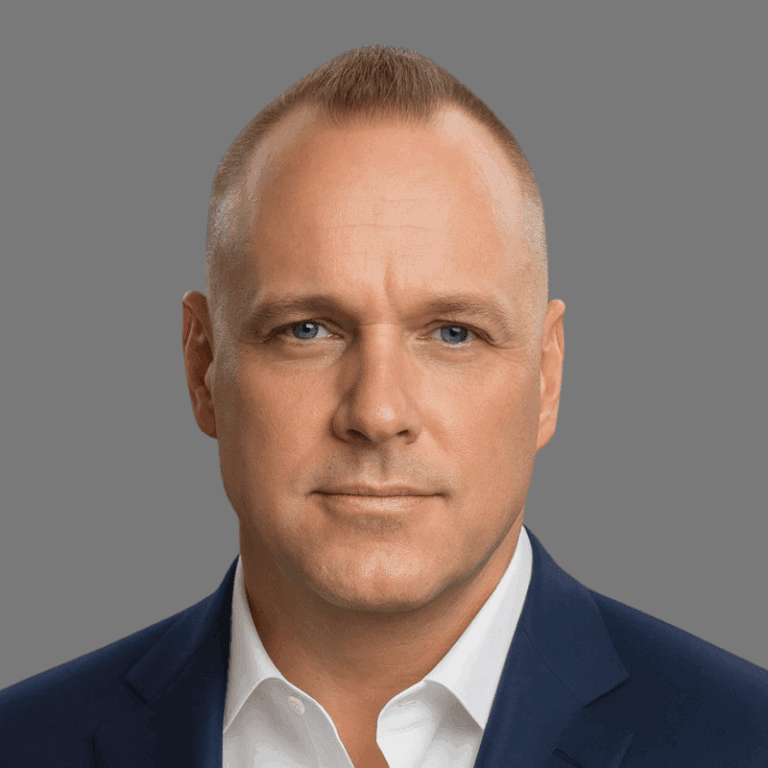
By: Ralf Ellspermann
25-Year, Multi-Awarded BPO Veteran
Published: 24 February 2026
Updated: February 24, 2026
30-Second Executive Briefing
- The 2026 Shift: India has transitioned from manual data entry to Agentic Revenue Cycle Management (RCM), leveraging the IndiaAI Mission’s 58,000-GPU compute cluster to automate 95% of routine coding.
- The Tech Edge: Use of Large Action Models (LAMs) allows Indian billing hubs to autonomously navigate payer portals and resolve “One Big Beautiful Bill” Act (OBBBA) requirements in real-time.
- Performance Impact: Providers using Indian “Autonomous Coding Engines” (ACE) report a 35% reduction in Days in A/R and a first-pass clean claim rate exceeding 98.5%.
- Compliance: Full enforcement of the DPDP Act 2026 ensures “Zero-Possession” data environments, making Indian hubs more secure than most domestic U.S. operations.
In 2026, the traditional image of a “medical coder” manually scouring patient charts is obsolete. As the global healthcare sector grapples with the “10% Denial Crisis” and the regulatory weight of the OBBBA, India has emerged as the world’s primary laboratory for Agentic Billing and Coding.
By leveraging the IndiaAI Mission’s subsidized compute (currently priced at just $0.78/hour or ₹65/hour), Indian BPO centers have moved beyond simple automation into Intelligence Arbitrage.
Deep Dive: The Move Toward “Cognitive Coding”
The fundamental breakthrough in 2026 is the transition from Robotic Process Automation (RPA) to Agentic Process Automation (APA). While RPA simply moved data between fields, APA “understands” clinical context.
Indian coding hubs now employ Multi-Agent Orchestration (MAO). When a patient is discharged, a “Triage Agent” scans the EHR. It identifies that a physician’s note for an orthopedic procedure is missing a specific lateralization modifier. Instead of flagging this for a human, a “Query Agent” automatically pings the physician’s digital inbox with a pre-filled clarification form. This Autonomous Query Workflow has reduced physician query response times from 48 hours to less than 15 minutes.
From “Labor Arbitrage” to “Intelligence Arbitrage”
John Maczynski, CEO of Cynergy BPO and a featured speaker at the World Health Care Congress, explains:
“We are no longer selling ‘hours of work’; we are selling ‘resolution velocity.’ In 2026, an Indian billing hub doesn’t just send a claim. Their Agentic AI simulates the payer’s ‘Digital Twin’ to predict a denial before submission. This is Intelligence Arbitrage—where human expertise is reserved only for the most complex clinical nuances.”
Table 1: The Evolution of Billing Workflows (2024 vs. 2026)
| Workflow Component | Legacy RPA Model (2024) | Agentic India Hub (2026) | Strategic Impact |
| Chart Interpretation | OCR + Human Verification | Multimodal LLMs (BharatGen) | 99.5% accuracy in complex clinical notes. |
| Payer Portals | Static Scraping (Breaks easily) | Large Action Models (LAMs) | Agents navigate UI changes autonomously. |
| Denial Management | Reactive (Post-denial) | Predictive (Pre-submission) | Prevents denials before they occur. |
| Scaling | Add more heads | Add more compute (GPUs) | Infinite scalability without hiring lag. |
Solving the OBBBA Compliance Puzzle
The One Big Beautiful Bill Act (OBBBA) of 2026 mandates that patients receive a single, consolidated bill. For U.S. hospitals with fragmented IT systems, this is a nightmare. Indian BPOs have positioned themselves as the “Consolidation Layer.”
Using Cross-Domain Agents, Indian centers pull data from disparate facility systems (Epic/Cerner) and professional billing platforms (Athena/NextGen). These agents verify that the Good Faith Estimate (GFE) matches the final bill. If a discrepancy is found, a “Reconciliation Agent” automatically adjusts the professional fee based on pre-set contract rules to ensure the patient receives a compliant bill within the 72-hour legal window.
The End of Linear Scaling: Decoupled Growth
In the legacy model, if a hospital’s patient volume doubled, they had to double their billing staff. In 2026, Indian BPOs offer Decoupled Growth. Because the core work is handled by specialized sub-agents—such as Documentation Scrutineers and Payer Rule Engines—the cost to collect actually shrinks as volume increases.
This shift is powered by India’s Sovereign AI Stack. By utilizing localized clinical models like BharatGen Param2, vendors avoid the “OpenAI Tax” (high API costs), passing these savings directly to U.S. health systems.
Technical Deep Dive: The “Zero-Possession” Security Model
With the DPDP Act 2026 fully active, Indian hubs have eliminated the “Offshore Data Center” risk. Through Pixel-Streaming Virtual Desktop Infrastructure (VDI), Indian coders and AI agents work on data that remains on U.S. soil.
The data is never “stored” in India; it is simply “rendered” there for the agent to process. This Ephemeral Processing satisfies the most stringent HIPAA requirements while allowing Indian hubs to utilize their superior technical talent.
Table 2: 2026 Performance Benchmarks
| Metric | US In-House (Legacy) | India Agentic Hub (2026) | Performance Gain |
| Clean Claim Rate | 78% – 82% | 98.5% – 99.1% | +18.2% Accuracy |
| Days Sales Outstanding | 48 Days | < 30 Days | 38% Faster Cash |
| Cost per Claim | $6.50 | **$1.15** | 82% Cost Reduction |
| Audit Defense Rate | 65% | 94% | Total Regulatory Resilience |
The Verdict on Autonomous Billing
As we navigate the complexities of 2026, the question is no longer if you should outsource, but how fast you can transition to an autonomous model. “The days of ‘butts-in-seats’ outsourcing are over,” says Ralf Ellspermann, CSO of Cynergy BPO. “The new gold standard is a partner that brings their own compute, their own agents, and a 100% guarantee on compliance.”
FAQ: Healthcare Billing Outsourcing 2026
Q: How does the IndiaAI Mission lower my costs?
A: By providing access to over 58,000 GPUs at a subsidized rate of ₹65/hour, the Indian government allows BPOs to run massive AI models for coding and auditing at a fraction of the cost of private US-based cloud providers.
Q: What is the “One Big Beautiful Bill” Act (OBBBA) compliance?
A: OBBBA mandates consolidated, transparent billing. Indian RCM hubs use Multi-Agent Orchestration to pull data from facility and professional fees in real-time, ensuring patients receive one accurate, compliant estimate within 72 hours.
Q: Is Indian billing secure under the new DPDP Act?
A: Yes. The DPDP Act 2026 mandates “Privacy-by-Design.” Indian hubs now use biometric MFA and pixel-streaming VDI, meaning data never physically resides on an offshore hard drive, virtually eliminating the risk of a local data breach.
Unlock cost-efficient growth with expert BPO guidance!
Partner with Cynergy BPO to connect with top outsourcing providers.
Streamline operations, cut costs, and scale your business with confidence.
Book a Free Call
Ralf Ellspermann - CSO
Author
Ralf Ellspermann is the Chief Strategy Officer (CSO) of Cynergy BPO and a globally recognized authority in business process and contact center outsourcing. With more than 25 years of experience advising enterprises and SMEs, he provides strategic guidance on vendor selection, CX optimization, and scalable outsourcing strategies across global markets. His expertise spans fintech, ecommerce and retail, healthcare, insurance, travel and hospitality, and technology (AI & SaaS) outsourcing.
A frequent speaker at leading industry conferences, Ralf is also a published contributor to The Times of India and CustomerThink, where he shares insights on outsourcing strategy, customer experience, and digital transformation.