



By: Ralf Ellspermann
25-Year, Multi-Awarded BPO Veteran
Published: 2 April 2026

Reviewed By: John Maczynski
Former EVP, World's Largest Contact Center
Updated: 2 April 2026
As of March 2026, the transition from “Experimental AI” to “Production-Grade Agentic AI” has made rigorous model evaluation the most critical phase of the development lifecycle. With the Kenya Artificial Intelligence Bill, 2026 currently under debate in the Senate—proposing fines of up to KES 5 million for non-compliant systems—the strategic move to outsource evaluation to Nairobi is no longer just about cost. It is about accessing a specialized “Sovereign Talent” pool that understands the 2026 mandates for human review, bias disclosure, and high-risk system classification.
30-Second Executive Briefing
- The “Agentic” Shift: 2026 evaluations now focus on “Trajectory Analysis” (how an AI reasons) rather than just single-answer accuracy.
- Global Standard Alignment: Utilization of the ITU-T F.748.77 framework (published March 11, 2026) for assessing foundation models.
- Bias Detection Excellence: Leveraging Kenya’s diverse socio-technical context to identify algorithmic biases that Western-centric testing often misses.
- Regulatory Compliance: Proactive alignment with the Data Protection Act 2019 and the 2026 mandate for human review of automated decisions.
- Strategic Governance: Cynergy BPO acts as the bridge, connecting enterprises with the top 1% of Kenyan firms specializing in “Evaluator-as-a-Judge” and red-teaming.
The Imperative of Rigorous AI Model Validation in 2026
In 2026, deploying a model is a high-stakes legal and operational event. Global standards have converged, and organizations are now required to prove “Ground Truth Alignment” before going live. Kenyan AI-ops firms, supported by the newly formed Outsourcing Alliance of Kenya (OAK) (officially launched February 3, 2026), have pioneered “Evaluation-Led Development.”
Instead of testing at the end of the cycle, these firms integrate validation into every sprint. This is particularly vital for Agentic AI, where models take autonomous actions. Kenyan evaluators provide the “Moral and Technical Friction” necessary to ensure these agents operate within safe behavioral and ethical boundaries.
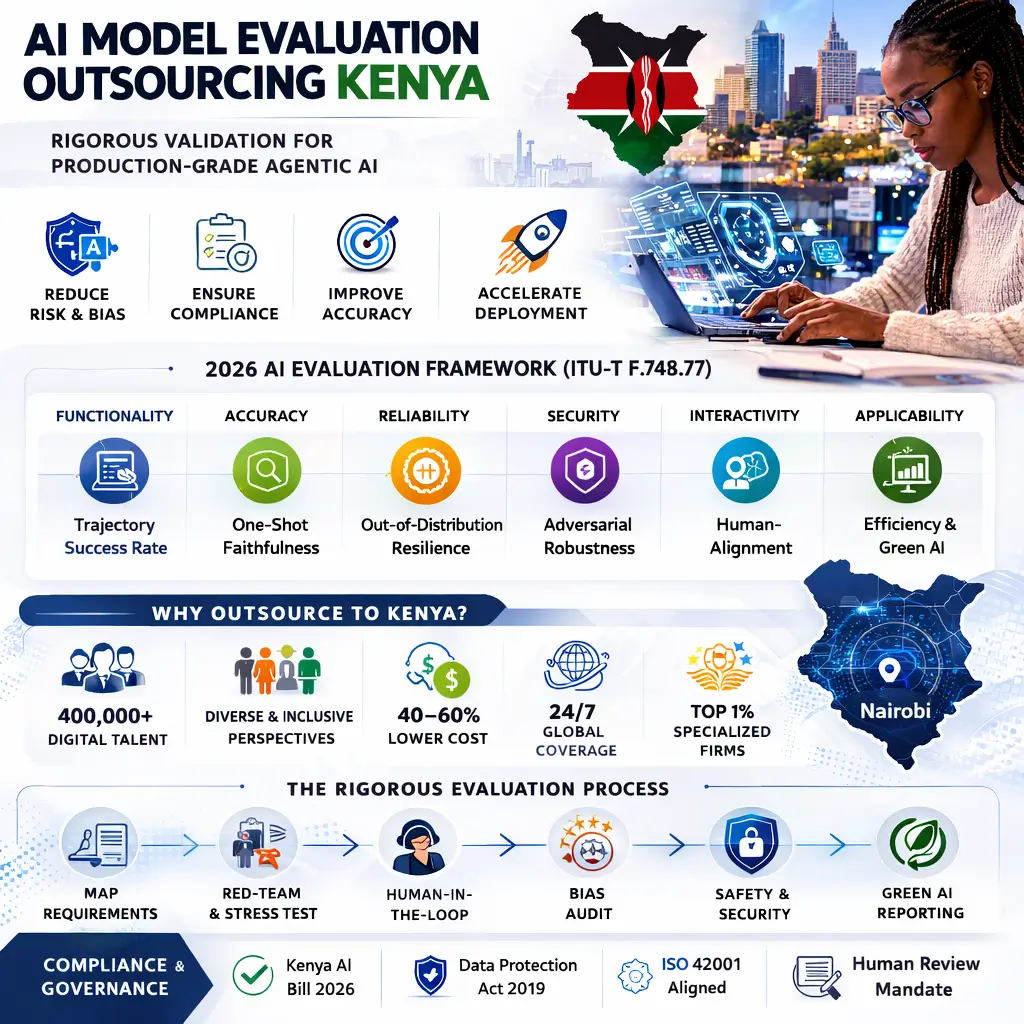
Table 1: 2026 Model Evaluation Framework (ITU-T F.748.77 Standards)
| Dimension | 2026 Specific Metric | Business Significance |
| Functionality | Trajectory Success Rate (TSR) | Evaluates the multi-step reasoning path of AI agents in complex workflows. |
| Accuracy | One-Shot Faithfulness Score | Measures RAG (Retrieval) accuracy to prevent hallucinations in customer data. |
| Reliability | Out-of-Distribution (OOD) Resilience | Ensures the model performs safely when encountering unexpected or “edge-case” data. |
| Security | Adversarial Robustness Level | Testing against “Prompt Injection” and “Data Poisoning” to maintain system integrity. |
| Interactivity | Human-Alignment Score | Scores the “naturalness” and safety of AI-human dialogue for 2026 CX standards. |
| Applicability | Inference Cost/Power Efficiency | Aligns with 2026 “Green AI” goals by measuring carbon footprint per 1k tokens. |
Table 2: Strategic Advantages of Outsourcing to Kenya
| Advantage | Description | 2026 Impact |
| Specialized Talent | Access to 400,000+ digital-ready youth via OAK and government programs. | Solves the global shortage of AI Quality Assurance (QA) and RLHF experts. |
| Diversity of Thought | Multi-cultural evaluators who identify “Western-centric” biases. | Ensures AI models are fair and globally applicable across diverse markets. |
| Governance Architecture | Vetting by Cynergy BPO ensures adherence to global ISO 42001 standards. | Mitigates legal risks associated with the EU AI Act and local data laws. |
| Cost-to-Skill Ratio | High-level expert evaluation at 40–60% lower costs than US/EU. | Optimizes R&D budgets while increasing the volume of testing cycles. |
| Operational Agility | 24/7 “Follow-the-Sun” evaluation and real-time monitoring. | Accelerates time-to-market for high-risk AI deployments in Finance and Health. |
The Rigorous Process: Future-Proofing AI Through Kenyan Partnerships
The efficacy of AI model evaluation in Kenya lies in a methodology that merges technical rigor with ethical foresight. Leading firms, such as the founders of OAK (CCI Kenya, CloudFactory, Teleperformance, and Sama), employ a 10-step “Validation-First” methodology that includes:
- Requirement Mapping: Aligning model goals with the ITU March 2026 standards.
- Adversarial Red-Teaming: Stress-testing agents in virtual “sandboxes” to identify security gaps.
- Human-in-the-Loop (HITL) Review: Expert Kenyan linguists score responses for cultural nuance and faithfulness.
- Bias Auditing: Utilizing tools like DeepEval for automated fairness checks.
- Environmental Reporting: Assessing the compute efficiency of models to meet 2026 ESG targets.
By partnering for AI model evaluation outsourcing to Kenya, enterprises are not just checking boxes; they are securing an independent, objective scrutiny that identifies blind spots internal teams might overlook.
Expert FAQs
What is the “Right to Human Review” in the 2026 Kenya AI Bill?
The Artificial Intelligence Bill, 2026 mandates that citizens are entitled to a human review of automated decisions in sensitive areas like loan approvals, insurance, and hiring. Kenyan BPO partners provide the human-in-the-loop (HITL) infrastructure required to satisfy this legal right.
How do Kenyan firms evaluate “Agentic” AI behavior?
In 2026, evaluation has moved from static Q&A to “Sandbox Simulation.” Kenyan firms use specialized “Evaluator Agents” to monitor how your AI agents navigate multi-step tasks, ensuring they don’t violate safety constraints or security protocols during autonomous execution.
Is my intellectual property safe during evaluation in Kenya?
Yes. Kenya’s Data Protection Act and the oversight of the Outsourcing Alliance of Kenya (OAK) ensure that all evaluation is conducted in secure, air-gapped environments. Furthermore, the 2026 legislative focus includes strict “Right of Publicity” and IP protections for data used in AI testing.
Can Kenyan firms help with “Green AI” certification?
Absolutely. Many Kenyan data centers are now powered by geothermal and solar energy. Evaluators include “Environmental Impact Reporting” as a standard part of the validation process, helping global firms meet their 2026 ESG and net-zero carbon requirements.
Share This
Unlock cost-efficient growth with expert BPO guidance!
Partner with Cynergy BPO to connect with top outsourcing providers.
Streamline operations, cut costs, and scale your business with confidence.
Book a Free Call
Ralf Ellspermann - CSO
Author
Ralf Ellspermann is the Chief Strategy Officer (CSO) of Cynergy BPO and a globally recognized authority in business process and contact center outsourcing. With more than 25 years of experience advising enterprises and SMEs, he provides strategic guidance on vendor selection, CX optimization, and scalable outsourcing strategies across global markets. His expertise spans fintech, ecommerce and retail, healthcare, insurance, travel and hospitality, and technology (AI & SaaS) outsourcing.
A frequent speaker at leading industry conferences, Ralf is also a published contributor to The Times of India and CustomerThink, where he shares insights on outsourcing strategy, customer experience, and digital transformation.